
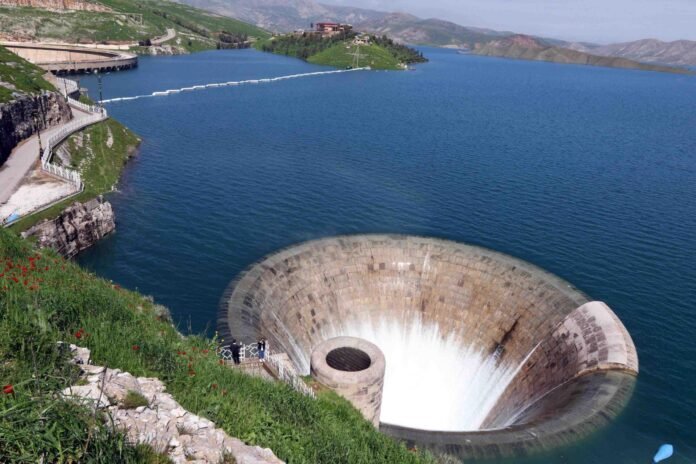
The Dukan Dam in the Kurdistan Region now holds just 25% of its total capacity, marking the lowest water level recorded in 60 years. This alarming situation threatens drinking water supplies, electricity generation, and agriculture across the region. As the crisis worsens, KRG demands immediate action to address its most urgent water challenge in decades.
The dam, located in Sulaymaniyah province, has lost around 75% of its water. According to official figures, only 1.75 billion cubic meters remain from a total storage capacity of seven billion cubic meters. This historic drop follows two major trends—diminishing rainfall and reduced inflow from Iran’s upstream dams.
In a troubling development, recent data show rainfall levels in the dam’s catchment areas have plummeted to just 240–250 millimeters. These amounts are far below seasonal norms. Large areas surrounding the reservoir have dried up, creating severe ecological and economic impacts.
Equally damaging are the water control policies of the Islamic Republic of Iran. The Iranian government has constructed several dams along the Little Zab River, the primary source that feeds the Dukan Dam. These upstream structures divert much of the water before it can enter Kurdistan. KRG demands immediate action to confront the growing regional water imbalance.
According to dam authorities, when Iran does release water, the timing is unpredictable and tied to its own energy production needs. “The water only flows when their turbines are active,” one official explained. “After power generation, the flow stops, making the inflows inconsistent and ineffective.”
The consequences are severe. The Dukan Dam plays a central role in producing hydroelectric power, with a maximum capacity of 400 megawatts. With water levels so low, energy production is significantly reduced. The dam also supplies drinking water to several urban centers and irrigates vast agricultural zones, including areas in Kirkuk.
The most immediate impact is on local residents. In the village of Kela Spiyan, people have noticed dramatic changes in water availability. “There used to be a scheduled release of water,” one resident said. “Now, since Iran built its dam, the water never comes regularly.”
While small amounts of released water still benefit local farmers and livestock owners before reaching the dam, the overall impact remains minimal. The Dukan reservoir continues to shrink.
Built between 1954 and 1959, the Dukan Dam was the first large-scale dam in Iraq. Its current state reveals the full scope of the region’s water crisis. With no binding international agreements on water-sharing in place, the Kurdistan Region remains vulnerable to upstream actions.
KRG demands immediate action from all involved parties to protect the future of this critical water source and to secure regional stability before the situation becomes irreversible.