
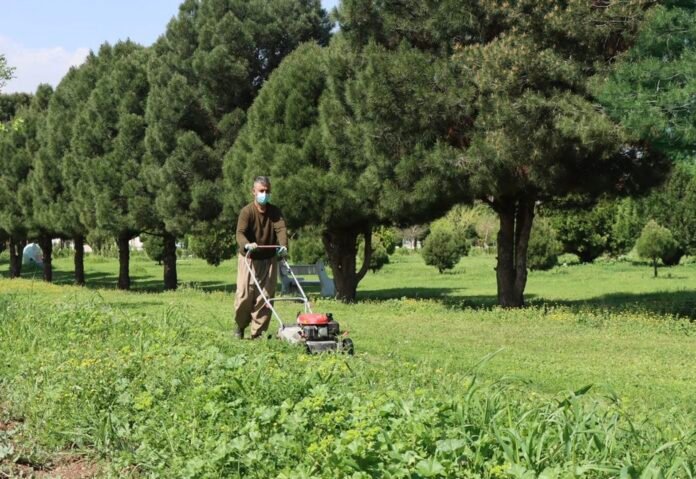
Sulaymaniyah continues to push forward with ambitious greening projects, aiming to match global standards in greenery coverage. The city is building new parks and gardens, while also preserving existing ones, despite ongoing drought and severe water shortages. These efforts seek to beautify the city and provide more natural spaces for residents.
According to Engineer Bahroz Salar, Director of the Parks Directorate, there are currently 510 parks under the city’s care. This includes seven large parks and 85 main boulevards, all maintained with greenery and regular services. He emphasized that water scarcity remains a serious challenge, particularly during the summer.
This year’s reduced rainfall has dried up many wells. Salar explained that in some areas, grass will only be watered if possible. For instance, Azadi Park once relied on 11 wells, but now only one remains active, and its water supply is minimal.
To sustain the plants, the Directorate operates 29 water tankers, some owned by the government and others rented. However, several rental contracts have expired, forcing reliance on state-owned vehicles for irrigation in recent weeks.
Tree planting remains a priority. In 2024 alone, 135,000 trees and shrubs were planted as part of a broader environmental plan. Local regulations also require investors to dedicate at least 25% of project areas to green spaces or compensate by developing public gardens. This has led to six new gardens, with three completed and three under construction.
Currently, Sulaymaniyah’s greenery coverage stands at 19.6%, approaching the global benchmark of 20%. Salar credited ongoing greening projects and park renovations for this progress but acknowledged that July, August, and September are the toughest months due to heat, water shortages, and limited staffing.
The Parks Directorate manages 17 agricultural zones that align with the city’s neighborhoods. Salar encouraged residents to actively help maintain greenery, especially during dry months, by watering plants and avoiding tree cutting, stressing that trees are essential for health and the environment.