
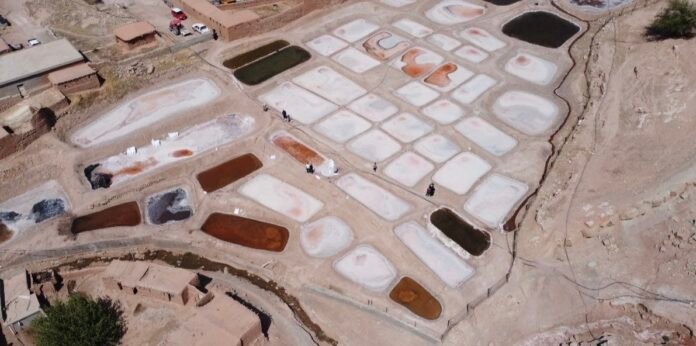
Salt makers in Garmian and Sulaymaniyah face serious challenges today. For centuries, families relied on salt ponds for income. Generations passed down skills, and communities thrived on this unique trade. However, production has now dropped sharply, and workers see an uncertain future.
In the past, the salt ponds in Garmian yielded nearly 900 tons each year. Farmers and traders benefited from the steady flow of high-quality salt. People used the product for cooking, for livestock, and even for traditional crafts. Now, the ponds give only about 250 tons annually. This huge decline worries many families who depend on the salt trade.
Several earthquakes in 2017 made the problem worse. Cracks opened in the earth, and fresh water leaked into the brine ponds. Because of that, the evaporation process weakened, and salt deposits shrank. Local workers explain that weak infrastructure also blocks any recovery. Without support, their historic trade may vanish soon.
Communities fear losing not only income but also a tradition rooted in culture. Many call for urgent investment to restore the ponds and protect this heritage. They believe better management, stronger structures, and modern tools can revive the industry.
If action comes quickly, the salt of Garmian and Sulaymaniyah may flow again. If not, one of the region’s oldest livelihoods may disappear forever.