
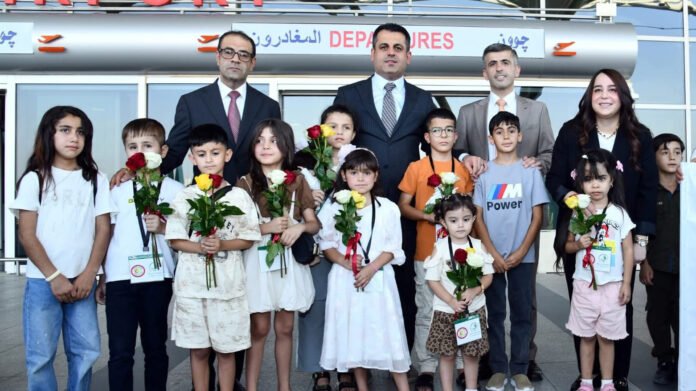
The Kurdistan Regional Government (KRG) sent its second group of 40 thalassemia patients abroad for critical bone marrow transplants. This follows a humanitarian directive from Prime Minister Masrour Barzani.
According to the Ministry of Health, the patients departed from Erbil International Airport with family members and companions. Officials supervised the group to ensure full care during travel. The Ministry confirmed that doctors conducted thorough medical examinations before approving the transplants.
The KRG covers all costs, including travel, accommodation, surgeries, medical exams, and post-treatment care. This relieves families of financial burdens while ensuring patients receive advanced medical services abroad.
This convoy is part of a larger initiative to send 140 patients abroad. The program has an allocated budget of nearly 11 billion Iraqi dinars. Patients travel to hospitals accredited by the Joint Commission International (JCI), where they receive specialized care. Eligible patients include those with compatible donors, either relatives or external matches.
Health Minister Dr. Saman Barzinji conveyed Prime Minister Barzani’s support to patients and families. He praised the initiative as a humanitarian milestone that reflects the government’s commitment to citizens with life-threatening diseases.
Seventy-two patients from the first convoy are already undergoing treatment. Preparations are underway to send a third group of patients in the coming days. The initiative is part of the ninth cabinet’s health agenda, prioritizing chronic and life-threatening illnesses such as thalassemia and cancer.
Officials emphasize that bone marrow transplantation provides a permanent cure for many patients. The program also strengthens local healthcare expertise, as doctors and patients gain experience from international hospitals. Furthermore, the initiative is expected to attract global partnerships and investments in Kurdistan’s healthcare sector.
The KRG’s continued support demonstrates its dedication to improving healthcare access, reducing family burdens, and promoting medical excellence in the region. By sending thalassemia patients abroad, the government ensures lifesaving treatment while reinforcing the foundations of the regional health system.