
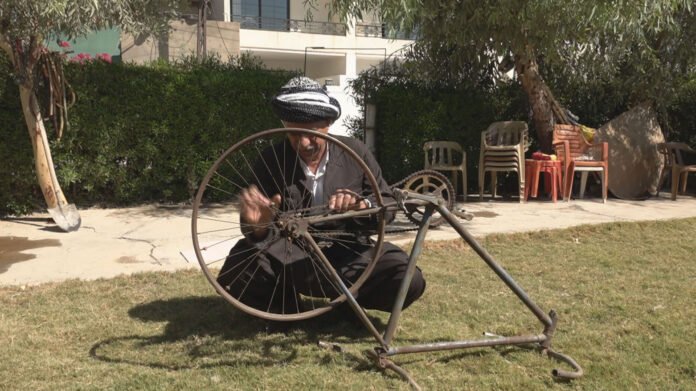
In Daratu, a simple bicycle has carried hope for thirty years. Once adapted to power a water pump during severe shortages, it became a lifeline for the community. Mam Ahmad and his neighbors used its pedals to generate makeshift energy, pumping water from wells into household barrels. “When water was scarce, this bicycle was our invention and our salvation,” he recalls.
The bicycle not only provided water but also strengthened community bonds. Families shared the effort, alternating shifts to fill barrels, and celebrated each success with meals and gatherings. Mam Ahmad’s son, AbdulStar, explains that the bicycle became a symbol of ingenuity and collective resilience during years of drought and limited government support. Purchased for just 60 dinars decades ago, it remains a cherished relic of survival and memory.
Daratu’s story meets a new era of water security in Erbil. The Kurdistan Regional Government, under Prime Minister Masrour Barzani, inaugurated the Erbil Emergency Rapid Water Project, a $480 million initiative supplying 130,000 cubic meters of water daily to 120,000 families. Minister of Municipalities Sasan Awni called it a “historic achievement,” promising decades of reliable supply.
The project features a treatment station, 204 kilometers of pipelines, and a zero-waste recycling system. Water from the Great Zab River undergoes five treatment stages before reaching households. Over 1,000 groundwater wells will be decommissioned, with 180 already closed in the first days of operation. The new system surpasses the combined capacity of previous projects built in 1968, 1983, and 2006.
The journey from a pedal-powered pump to a technologically advanced water network highlights both human resilience and governmental progress. For Daratu, the bicycle remains a symbol of survival. For Erbil and the Kurdistan Region, the new project marks a turning point from scarcity to abundance.