
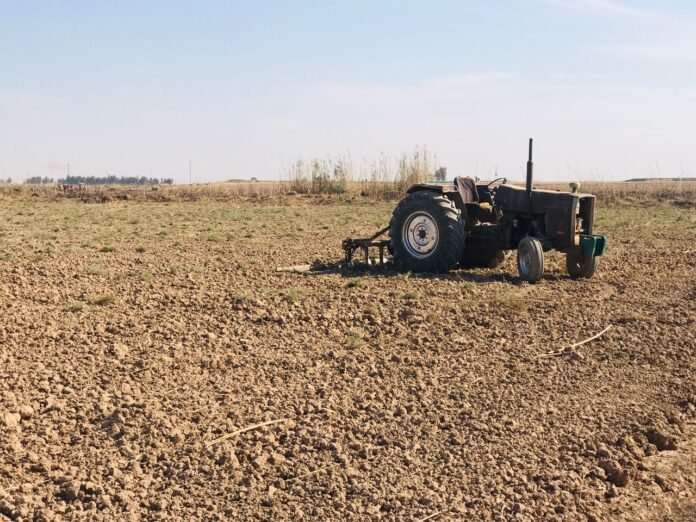
Kurdish farmers in Kirkuk are facing increasing difficulties as access to water and farmland becomes severely restricted. Many report repeated arrests and deliberate damage to irrigation systems. Locals describe these measures as a continuation of “Arabization” policies aimed at displacing Kurdish communities.
Farmers say Iraqi forces, including the army and police, repeatedly detain residents for days without formal charges. Mohammed, a farmer from Shanagha village, explained that he has been arrested four times this year alone. He added, “They want us to give up the land and leave, but we will resist.”
Irrigation systems are frequently sabotaged, leaving fields dry and crops at risk. Local residents work under harsh conditions to repair damaged water lines without government support. Jouhar Rahman, another farmer, stated, “Our dignity lies in our land. If you do not defend your land, you have no dignity.”
Restrictions on water access and agricultural operations have intensified tensions, mirroring historical “Arabization” campaigns under the Ba’ath regime. During that period, thousands of Kurdish and Turkmen families were forcibly displaced, replaced by Arab settlers. Today, observers say similar pressures are applied through administrative and security measures rather than open violence, effectively weakening Kurdish rural presence.
Political leaders in Kirkuk emphasize the need to implement Article 140 of the Iraqi Constitution. This article calls for normalization, a census, and a referendum to determine disputed territories’ status. Sara Sheikhani, a KDP candidate in Kirkuk, said their electoral platform focuses on restoring property rights, ending demographic manipulation, and enforcing Article 140.
Despite arrests and water shortages, Kurdish farmers insist they will remain on their lands. Residents hope upcoming elections will bring constitutional justice, restore water access, and secure their rights to ancestral lands. Many see perseverance as the only way to protect livelihoods, culture, and identity in Kirkuk.