
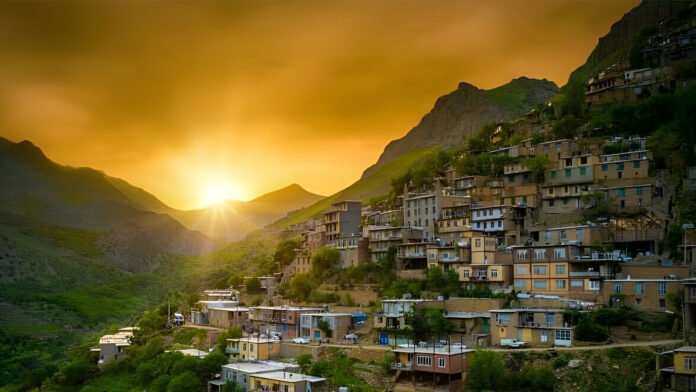
Hajij — The historic Kurdish village of Hajij in eastern Kurdistan has officially entered the nomination process for inclusion on UNESCO’s 2027 World Heritage list. The nomination marks a major milestone for the Hawraman region, which continues to attract global attention for its deep cultural roots and breathtaking architecture.
Hajij sits within the mountainous heart of Hawraman, an area known for its distinctive stepped villages that blend naturally into rugged cliffs. Local experts describe the village as a living museum, preserving traditions that have endured for thousands of years. Archaeological findings in and around Hajij reveal human settlements dating back more than 40,000 years, highlighting its immense historical value.
The nomination aims to safeguard Hajij’s unique architectural style, its harmony with nature, and its intangible cultural heritage, including local music, craftsmanship, and oral traditions. Cultural researchers say that the village represents one of the most authentic examples of Kurdish mountain life and environmental adaptation.
Kurdish heritage advocates have welcomed the move, stressing that UNESCO recognition would strengthen efforts to protect the site and bring sustainable tourism to the area. Regional authorities have also pledged to enhance infrastructure while maintaining the village’s traditional character.
If approved, Hajij would join the Hawraman region’s existing UNESCO-recognized cultural landscapes, reinforcing Kurdistan’s role in preserving one of the world’s oldest continuous civilizations.