
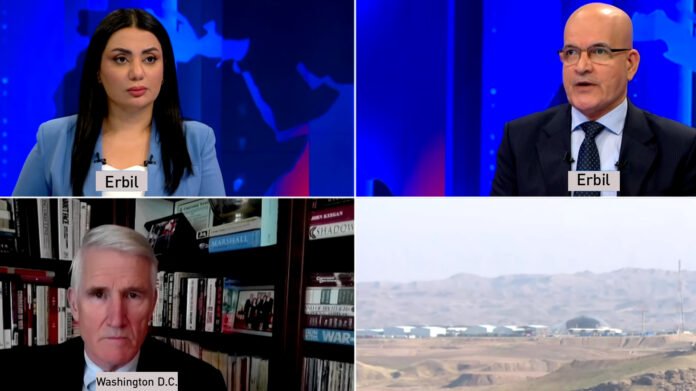
Former U.S. Assistant Secretary Mark Kimmitt and Kurdish analyst Barzan Murad offered sharply different views on the future of U.S.–Kurdistan cooperation after the recent Khor Mor attacks. Both experts addressed the growing security gap in the Region, yet each one proposed a different path forward.
Kimmitt argued that the United States maintains a strong, long-term partnership with Kurdistan. He said Washington continues to support the Region’s security, energy stability, and reform agenda. Moreover, he stressed that the U.S. remains ready to sell advanced air-defense systems to the Kurdistan Region whenever the legal process moves forward. He also noted that U.S. officials value Kurdistan’s role in regional stability.
However, Murad offered a far more urgent message. He said the continuous attacks on Khor Mor show a dangerous escalation that threatens millions of civilians. Furthermore, he argued that the Region cannot wait for approval through complex political channels. He insisted that Kurdistan must secure air-defense systems directly, even if some sides object. He also warned that energy infrastructure will remain vulnerable without a rapid upgrade in defense capabilities.
Both speakers agreed that the Khor Mor strikes highlight the need for decisive action. Yet they disagreed on the best approach. Kimmitt encouraged cooperation and procedure, while Murad demanded immediate steps that bypass every delay. Their contrasting positions now shape a critical debate about the future of U.S.–Kurdistan security ties, especially as the Region races to protect its vital gas fields.