
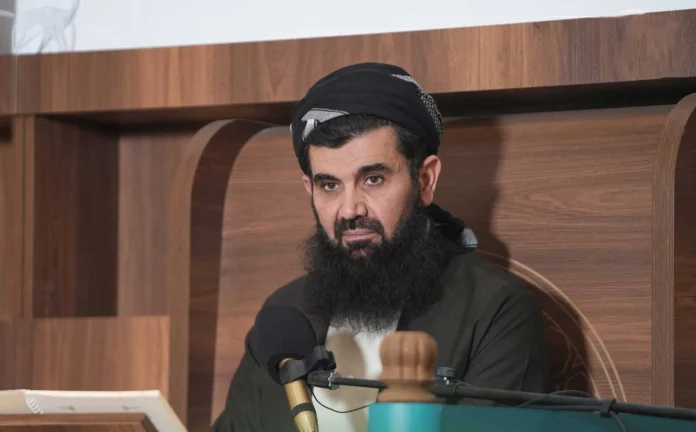
The Kurdistan Region’s Ministry of Higher Education and Scientific Research permanently dismissed prominent Salafi figure Abdullatif Ahmad on Wednesday. This historic decision followed a thorough investigation into serious allegations of sexual misconduct against the lecturer. Consequently, officials applied Article 8 of the Discipline for State and Public Sector Employee Law to his case. This specific law imposes the harshest possible disciplinary penalty within the region’s public sector framework.
The ruling forces Ahmad to resign immediately from his position at the University of Sulaimani. He previously taught in the Department of Islamic Sciences there. Under regional administrative law, this specific penalty constitutes complete expulsion from public service. Furthermore, the legal decree permanently bars the individual from gaining future employment in any government institution.
This final decision follows weeks of intense public controversy across the region. The scandal began after individuals published a series of audio recordings and text messages online. These recordings prompted immediate allegations from multiple female students at the university. Eventually, the University of Sulaimani established an official investigative committee to review the evidence.
Several female students from the College of Islamic Sciences stepped forward with complaints. They alleged that Ahmad harassed them through his personal phone number. According to their testimonies, the lecturer requested explicit photographs. Additionally, he reportedly sent them highly inappropriate images over the phone. As a result, the students filed multiple formal complaints against him.
Ahmad strongly denied all of these allegations during the investigation. He publicly described the leaked recordings as malicious slander. He also insisted that artificial intelligence or editors faked the voice in the files. Ahmad currently serves as the main leader of the Salafi movement in the region.
In late June, Higher Education Minister Aram Qadir prepared for the committee’s preliminary findings. Activists had first published the audio and video recordings in early June. They claimed that four female students provided the original files. Therefore, investigators focused heavily on verifying the authenticity of the recordings. They carefully determined whether individuals altered the media using artificial intelligence tools.
This case is not the first major controversy involving Ahmad. In 2016, other private audio recordings leaked to the public. Those files exposed conversations between him and another female student. That specific student later divorced her husband and married Ahmad.