
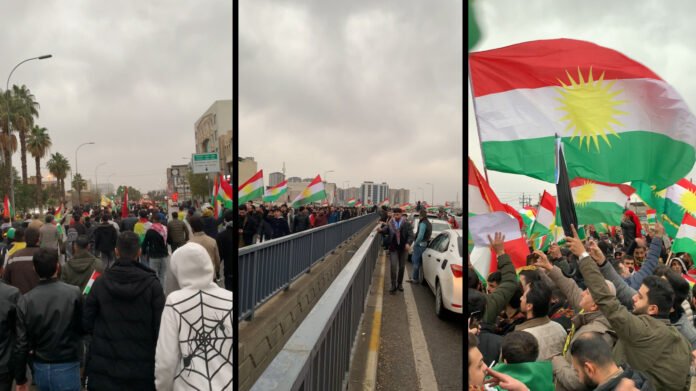
Public protests took place in Erbil and Rania on Friday amid rising tensions in northern Syria. Demonstrators gathered to show solidarity with Western Kurdistan and Kurdish neighborhoods in Aleppo. The rallies followed recent Syrian army attacks that triggered mass displacement and civilian deaths.
From the beginning, protesters condemned the military escalation near civilian areas. They accused government forces of targeting residential neighborhoods. As a result, nearly 150,000 residents fled their homes in recent days. In addition, local reports confirmed the deaths of at least 23 civilians.
During the protests, participants carried Kurdish flags and displayed banners calling for protection. They chanted slogans demanding an end to attacks on civilians. Moreover, speakers emphasized unity among Kurdish communities across regions. They stressed shared responsibility during moments of crisis.
In Erbil, organizers highlighted the severe humanitarian consequences of the attacks. They described widespread displacement and growing shortages of food and shelter. Furthermore, they warned of increasing pressure on local aid networks. Therefore, they urged immediate humanitarian intervention.
Meanwhile, demonstrators in Rania focused on the impact on families and children. They spoke about disrupted lives and unsafe living conditions. Additionally, they called on international actors to respond quickly. They demanded accountability and protection for civilians.
Throughout the protests, organizers emphasized peaceful action and lawful expression. They encouraged continued public engagement and awareness campaigns. Consequently, they framed the demonstrations as a moral response to injustice.
However, participants expressed frustration over limited global reaction. Still, they pledged ongoing support for affected communities. They emphasized resilience and collective determination.
As the rallies concluded, protesters reaffirmed commitment to Western Kurdistan. They described Aleppo’s Kurdish neighborhoods as culturally and historically significant. Ultimately, the demonstrations reflected rising concern over the crisis. They also signaled strong public opposition to continued military escalation.