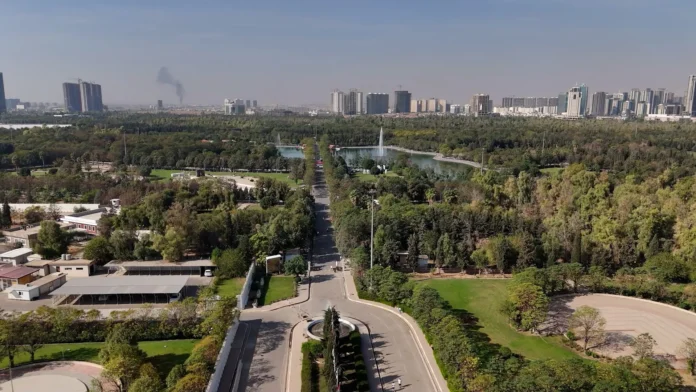
Erbil’s green areas now cover over 20% of the city, thanks to two decades of work by both local authorities and residents. This puts the capital closer to the international green space standard for large cities.
Many government agencies across the Kurdistan Region have worked to expand greenery. These include local municipalities, environmental offices, and park planners. Citizens have also become more aware of how green spaces help public health and protect the environment.
Rebin Ahmad, head of Erbil’s Parks Department, said the city has come a long way. “Twenty years ago, Erbil had only 3% green space,” he noted. “Now it’s over 20%. In the last five years alone, the ninth cabinet helped raise the rate by 2.5%. This shows real effort and progress.”
Global urban standards recommend that large cities have 30% green space. While Erbil has not yet reached that, officials believe it is well on the way. A major project is already underway to boost the numbers further.
This project is called the Green Belt. Hemen Saeed Murad, Director of Agriculture, explained that the belt will surround the city. It will stretch beyond the 150-meter ring road and span two kilometers in width. At least 10 different zones will be included.
The plan focuses on planting pistachio and olive trees. These trees need little water but produce high-value crops. The Green Belt project is the first step in Erbil’s new city masterplan.
Erbil is now one step closer to becoming a greener, healthier city.