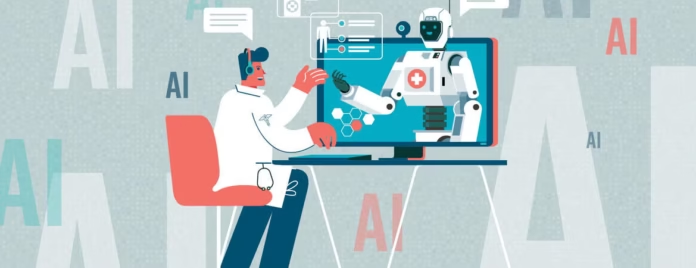
Erbil hosted a panel of doctors and medical specialists to discuss artificial intelligence in healthcare. Experts explored how AI improves diagnosis, treatment, and medical data management. They also examined challenges and ethical concerns tied to its use.
During the discussion, participants highlighted how AI can increase accuracy in medical tests. They explained that integrating AI tools helps doctors detect diseases earlier and plan treatments more efficiently. Furthermore, AI can reduce errors in patient records and streamline hospital workflows.
Panelists stressed that physicians must stay updated on the latest AI applications. Training programs and workshops can help medical professionals understand how to use AI safely. They also encouraged hospitals and clinics in Erbil to adopt these technologies to improve patient care.
Experts noted that ethical guidelines are essential for AI in medicine. They argued that professionals must ensure patient privacy and avoid relying solely on automated systems. In addition, combining human expertise with AI enhances decision-making in complex cases.
The panel emphasized the need for local institutions to keep pace with global developments. Participants suggested partnerships with international organizations to implement advanced AI tools. They also recommended government support to fund AI research and integration into hospitals.
Attendees agreed that AI could transform healthcare in Erbil. They underlined that careful implementation can improve outcomes, save time, and reduce operational costs. The discussion encouraged medical staff to embrace new technologies while maintaining high ethical standards.
Overall, the Erbil panel highlighted AI’s growing role in medicine. Specialists concluded that education, ethical oversight, and collaboration are key to maximizing AI’s benefits in healthcare.