
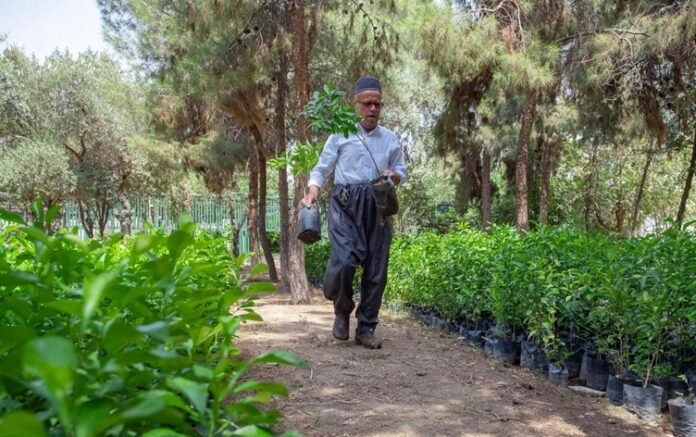
The city of Erbil is planting around 300 trees every day as part of a major initiative to expand green spaces, combat air pollution, and mitigate the effects of climate change, city officials said.
Since 2019, more than 1,379,000 trees, shrubs, and flowers have been planted across the city center, according to Sarwar Waisi, head of Erbil’s Parks Engineering Department. Municipal workers plant roughly 300 trees daily, totaling over 100,000 trees each year.
In the past, the city imported many trees and plants, which proved costly and often unsuitable for Erbil’s climate. “Some of those types carried diseases or failed to adapt and eventually died,” Waisi explained. Today, the city relies primarily on local nurseries, which grow species suited to Erbil’s weather. The parks department operates three private nurseries for this purpose.
Trees and flowers have been planted in key areas, including the 120-meter and 60-meter roads, along Gulan Street, and around the historic citadel. These efforts have increased green coverage within the city from 19.8 percent to 20.15 percent.
The municipality now requires all development projects, residential or industrial, to allocate at least 30 percent of land for greenery; projects that fail to comply cannot receive permits.
Erbil’s green initiative is part of a broader plan to address rising temperatures and poor air quality. The first phase of a city-wide green belt has been launched, including the planting of millions of trees and the construction of artificial ponds around the capital.
Air pollution in Erbil is among the worst in Iraq, driven by vehicle emissions, diesel generators, and frequent dust storms. Authorities have improved conditions by shutting down many low-quality private generators.
With Iraq facing extreme weather, prolonged droughts, and desertification, Erbil’s urban greening efforts aim to set a sustainable example, improve public health, and enhance the city’s resilience to climate change.