
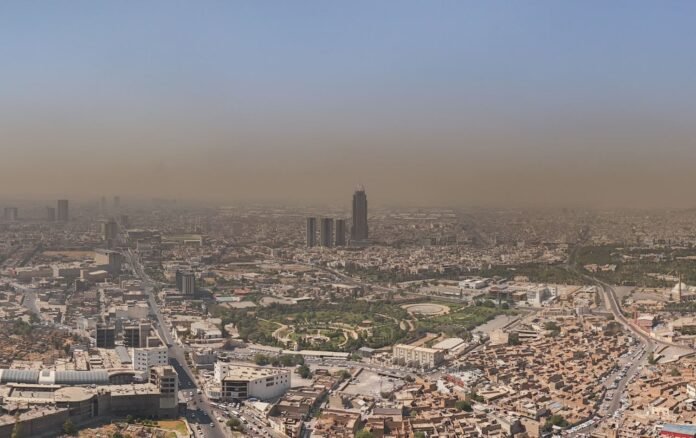
Erbil’s governor, Omed Khoshnaw, confirmed that pollution levels in the city have reached dangerous levels. The announcement came during a symposium organized by the Rwaz Research Foundation. According to Khoshnaw, multiple academic institutions secretly carried out a detailed study across Erbil. The results showed that air quality in some neighborhoods poses serious health risks.
Most of the heavily polluted areas are located near oil refineries. In a swift response, local authorities shut down dozens of illegal and unlicensed refineries. This immediate action already led to noticeable improvements in air quality across several districts.
To combat long-term pollution, the city has launched a wide green belt project. The initiative aims to increase vegetation, reduce dust, and improve urban climate conditions. At the same time, the Kurdistan Regional Government has taken steps to reduce noise and air pollution caused by generators. So far, they have removed hundreds of residential generators, leaving only 1,600 in operation across Erbil.
Environmental issues in Erbil continue to grow. Besides pollution, the city now faces serious water shortages and rapid desertification. Current estimates show that 39% of the region’s land has become desert. Water availability also continues to fall, reaching just 600 cubic meters per person per year. This amount is far below the global average needed for a healthy environment.