
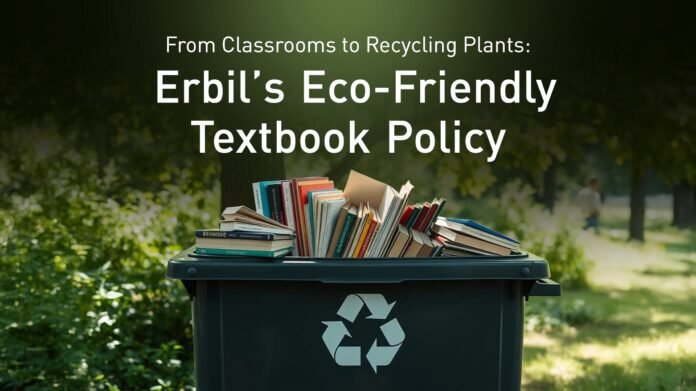
Schools in Erbil no longer burn or discard outdated textbooks. Instead, they now send them to recycling plants. Education officials explained that the move supports environmental protection and reduces waste.
On Sunday, Redar Sabir, Head of the Library Department at the Erbil Directorate of Education, highlighted the new process. He noted that textbooks are printed with strong quality, so they last for many years. However, once they lose relevance, schools collect them and hand them to the Ministry of Education. Through public tenders, these books are then sold to recycling companies.
Sabir added that the same method applies to books replaced by new curricula. A limited number of old copies remain archived for documentation. He explained that keeping them helps track changes in the education system and improves teaching methods.
Regarding costs, he clarified that there is no fixed annual budget for printing. The ministry prints only when needed, since many books can serve several classes over time. This approach reduces waste while ensuring efficient use of resources.
The recycling policy reflects a broader commitment to green practices. Over the last decade, Erbil has promoted tree-planting, waste-sorting, and public awareness campaigns. These projects aim to reduce pollution and protect natural resources.
By reusing paper from outdated books, the city lowers landfill pressure and limits harmful emissions. The policy shows how education and environmental care can move forward together.