
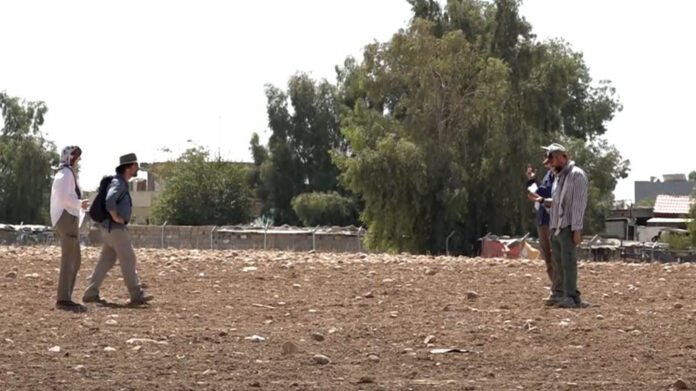
Additionally, archaeologists recently identified five new sites. They conducted a survey across Erbil’s outskirts. Specifically, they examined eleven land plots. Consequently, they designated five as significant archaeological areas.
Moreover, these locations had no prior records. Mohammed Lashkri, Head of Antiquities, confirmed this discovery. His team focused on Erbil’s greenbelt. They particularly explored the Pirzin and Bahra regions. Furthermore, they used specialized electronic mapping tools. They also combined these with physical inspections.
So far, surveys have registered 988 historical sites across Erbil’s plains. Jason Ur, leading Harvard’s archaeological team, emphasized their importance. He stated these findings prove Kurdistan’s rich historical depth. He also noted the region’s cultural significance rivals the broader Middle East.
Furthermore, Harvard University has collaborated closely with local authorities. Since 2012, they have documented over 6,500 archaeological sites throughout Kurdistan. Their ongoing work aims to preserve and study this cultural heritage.
Ultimately, these efforts highlight Kurdistan’s historical wealth. They also underscore the need for continued exploration and protection.