
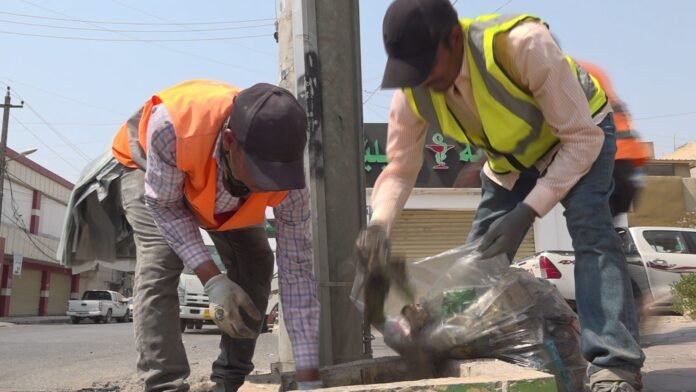
Under the blazing Erbil sun, thousands of sanitation workers are working day and night to keep the city clean. These dedicated crews collect more than 60,000 tons of waste every month, even as the government pushes ahead with a plan to introduce large-scale recycling.
The effort is massive and costly. More than 11,000 workers across the region handle over 7,000 tons of garbage daily. They rely on 2,453 vehicles and cleaning machines to complete the job. In Erbil, the city is divided into six zones, each staffed by about 250 workers rotating through three shifts.
Working in the extreme heat, these teams clean streets, markets, and neighborhoods without pause. Mohammed Rashid, one of the sanitation workers, described the difficulty. “We work in harsh summer conditions,” he said, urging citizens to avoid littering. “Some cooperate, but others ignore us and sometimes cause trouble.”
Despite these challenges, many Erbil residents appreciate their work. Ismail Aziz, a shopkeeper, praised their efforts: “They clean from morning to night. Thanks to them, 95% of Erbil is clean.” Environmental activist Mohammed Bakhtiar echoed that praise but added, “Citizens must also help keep the city clean.”
To create long-term solutions, the Kurdistan Regional Government plans to build a recycling plant in Erbil. Dr. Sinan Abdullah, spokesperson for the Environment Board, explained that the facility will reduce landfill use and limit the harmful release of methane gas during hot months.
Abdullah emphasized the need to recycle solid waste like plastic and metal. “Burning and burying garbage damages the environment,” he said. “We need modern plants to process these materials properly.” He also revealed that the plan includes opening a recycling center in every major city.
The sanitation system’s current form costs the government over 10 billion dinars each month. However, the move toward recycling aims to cut costs in the long term and reduce environmental damage.
Every morning, Erbil’s streets are clean — the result of non-stop labor and commitment. But officials warn that success depends on cooperation between the public and the government. Cleaner streets and a healthier environment require effort from everyone.