
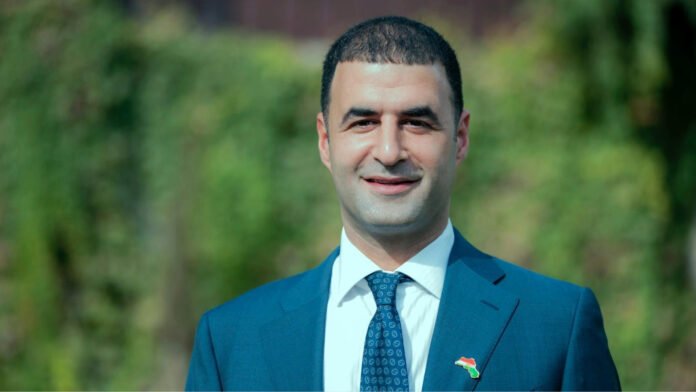
Sirwan Najmiddin Karim, son of former Kirkuk governor Najmiddin Karim, strongly criticized the recent administrative changes in Kirkuk, warning that the deal threatens the Kurdistan Region. He said the agreement repeats past political setbacks that weakened Kurdish control over the disputed province.
Karim linked the current situation to October 16, 2017, when Iraqi federal forces and allied groups took control of Kirkuk. He argued that internal Kurdish divisions triggered those events and continue to influence today’s political tensions.
He also condemned the 2024 agreement signed at Baghdad’s Rasheed Hotel, which created a new power-sharing arrangement in Kirkuk. The deal introduced a rotational system for the governorship involving Kurdish, Arab, and Turkmen parties. Karim said the agreement trades Kurdish authority for political gains in Baghdad.
He warned that such arrangements weaken the Kurdistan Region’s position within Iraq’s federal system. According to him, repeating similar deals will further reduce Kurdish influence in disputed areas.
The Kurdistan Democratic Party (KDP) rejected the agreement and boycotted the provincial council session that approved it. Party officials said the process bypassed Kurdish consensus and violated principles of fair representation.
The dispute reflects ongoing tensions over Kirkuk, a multi-ethnic province claimed by Kurdish, Arab, and Turkmen communities. The city remains one of Iraq’s most sensitive political flashpoints.
Analysts say the latest developments could deepen divisions between political factions in Baghdad and Erbil. They also warn that instability in Kirkuk may continue unless a broader political agreement is reached on governance and constitutional issues.
Despite ongoing negotiations, no final settlement has emerged. The future administration of Kirkuk remains uncertain as competing political blocs continue to negotiate influence and control over the province.