
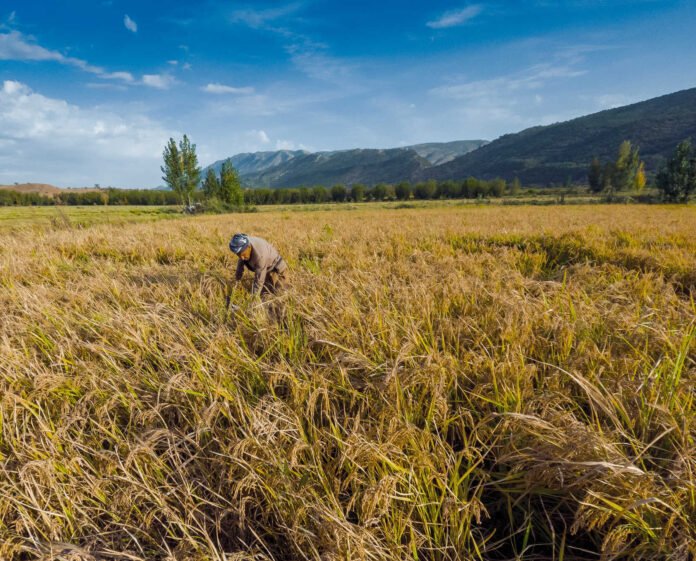
Farmers across the Kurdistan Region have begun the rice harvest season, blending centuries-old traditions with modern agricultural development. In Duhok alone, more than 21,000 acres are expected to yield about 21,000 tons of rice this year.
Throughout the region, families gather in “Kharman” yards to dry and thresh the golden grain, maintaining a practice passed down for generations. “We bring the rice here to dry under the sun before threshing,” said Khalid Mohammed, a farmer near Erbil. “It’s our village’s tradition.”
The harvest also fosters community unity. “People help one another and share food with the poor,” said teacher Saman Chavshin. “Even those without land can work and earn a living.”
Kurdistan’s rice — especially Akre’s varieties like Tahaluf and Kasandita — is prized for its rich aroma and flavor. According to Duhok’s Agriculture Directorate, local yields average up to 1,200 kilograms per acres.
The Kurdistan Regional Government (KRG), led by Prime Minister Masrour Barzani, has made agriculture central to economic diversification. Through export programs, Kurdish rice has reached markets in Sweden and will soon expand to Gulf countries.
As autumn sunlight fills Duhok’s paddies, each sack of rice symbolizes hard work, cultural pride, and Kurdistan’s growing role in regional food production.