
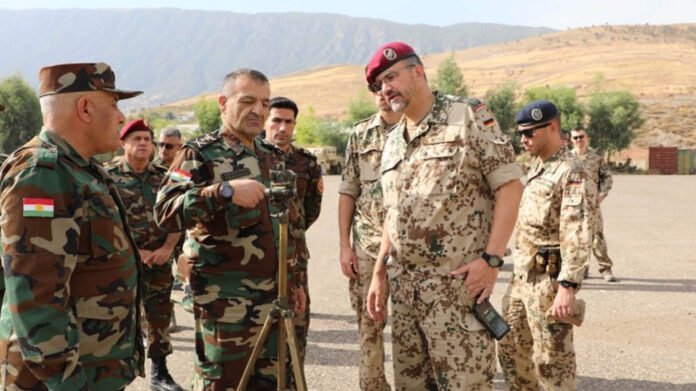
Germany’s parliament has approved an extension of its military deployment in Iraq and the Kurdistan Region until the end of 2027. The decision ensures the continued presence of German forces as part of international efforts against the Islamic State.
The Bundestag passed the measure on Thursday, just one day before the existing mandate was set to expire. Under the new authorization, Berlin will allocate approximately €109 million this year to fund the mission in Iraq and the Kurdistan Region.
Germany currently maintains more than 500 troops stationed in Erbil and Baghdad. These forces operate within NATO-led missions and the international coalition fighting ISIS. According to the mandate, the mission focuses on training, advising, and supporting local security forces rather than engaging in direct combat.
German lawmakers emphasized that continued engagement remains necessary to prevent ISIS from reestablishing influence in the region. They noted that local forces still require international support to maintain long-term stability.
Germany has played a significant role in Iraq and the Kurdistan Region since 2014. During the war against ISIS, Berlin trained Kurdish Peshmerga forces and supplied military equipment, including MILAN anti-tank missile systems. German assistance also included humanitarian aid and reconstruction support.
Over the past decade, Germany has provided more than €3 billion in combined security and humanitarian assistance to Iraq and the Kurdistan Region. Officials describe Germany as one of the key international partners in post-ISIS stabilization efforts.
In addition to its military presence, Germany continues to support reforms within the Kurdistan Region’s security sector. This includes backing initiatives aimed at unifying the Peshmerga forces under a single, coordinated command structure.
Germany remains an active member of the US-led Global Coalition to Defeat ISIS. Officials say the extended deployment reflects Berlin’s long-term commitment to regional security and cooperation with Iraqi and Kurdish authorities.