
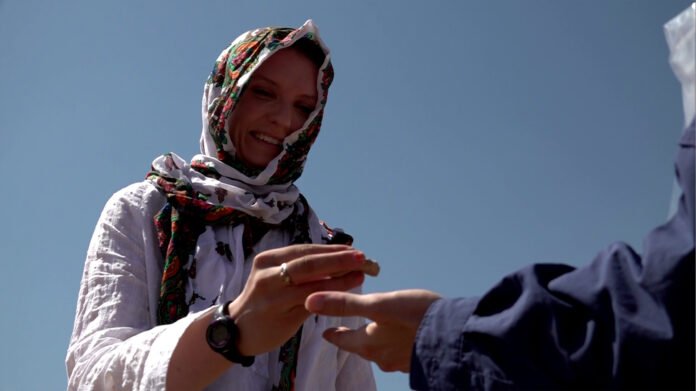
A joint Harvard-KRG archaeological survey in Erbil has uncovered five previously unknown ancient sites. This brings the total number of registered sites in the province to 988. The discoveries were made in the Green Belt area, highlighting Kurdistan Region’s rich history and its role as a “cradle of civilization” in the Middle East.
The team, composed of Harvard archaeologists and Kurdish experts, conducted a detailed survey of 11 plots in the Pirzin and Baharka areas. Mohammed Lashkri, Director of Antiquities Affairs, explained that the five sites were not recorded in any previous archaeological database.
“This work in Erbil’s Green Belt shows the depth of our historical heritage,” Lashkri said. “We are documenting sites carefully using electronic mapping and on-site evidence collection.”
The Harvard-KRG collaboration began in 2012. It has systematically cataloged ancient settlements across the Kurdistan Region, identifying over 6,500 sites to date. Jason Ur, head of the Harvard mission, said the density of sites proves the region’s historical importance.
“So far, 988 archaeological sites have been identified within Erbil province,” Ur told Kurdistan24. “This confirms that Kurdistan’s history is as significant as other parts of the Middle East. The region is essential for research and preservation.”
The discoveries are part of a broader resurgence in studying the Kurdistan Region’s layered past. Sites range from Assyrian, Babylonian, and Sumerian periods to even earlier human settlements. The Shanidar Cave in Soran, for instance, revealed “Shanidar Z,” a 75,000-year-old Neanderthal woman, discovered by the University of Cambridge. Her reconstruction featured in a Netflix documentary, prompting the creation of a nearby museum.
Other notable discoveries include a 20,000-year-old human settlement in Plngan Cave (Soran) by the University of Barcelona, the 4,000-year-old city of Kunara near Sulaimani by French archaeologists, and a 3,400-year-old Mitanni-era city in Duhok by German-Kurdish teams.
The Kurdistan Region has attracted international teams from Italy, Germany, France, and the U.S., working alongside Kurdish experts. Michele Camerota, former Italian Consul General in Erbil, praised the collaboration, calling Kurdistan “sometimes defined as the cradle of civilization.”
As the Harvard mission continues, the new sites in the Erbil plain add to the region’s historical legacy. Each site reflects centuries of human activity and promises further discoveries for scholars and future generations.