
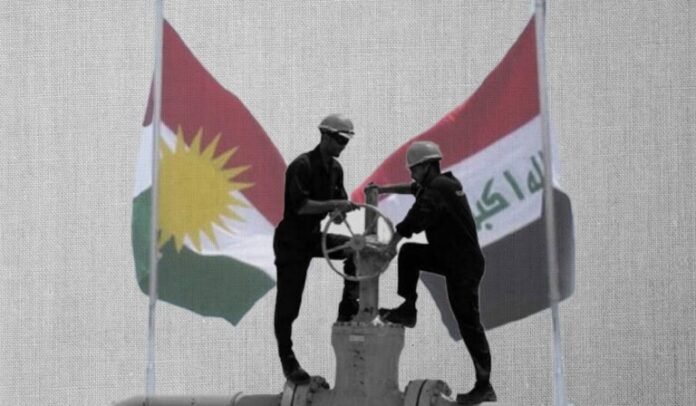
The Kurdistan Democratic Party (KDP) announced that a Kurdish delegation will soon travel to Baghdad to finalize discussions on resuming oil exports through the Ceyhan pipeline.
KDP lawmaker Mahma Khalil stated that Kurdistan’s oil exports play a vital role in strengthening Iraq’s treasury and boosting the country’s position in global energy markets. He added that the Kurdistan Regional Government (KRG) has already provided Baghdad with all requested data and fulfilled its commitments under previous agreements.
The upcoming delegation is expected to focus on setting a clear timetable for restarting oil exports. According to Khalil, both the Iraqi Oil Ministry and the Kurdish Ministry of Natural Resources have already agreed on export volumes. He also called on the federal government to release delayed salaries for Kurdistan Region employees, stressing that budget amendments previously passed show tangible progress.
Kurdistan Region Prime Minister Masrour Barzani recently confirmed that Erbil sees no political or technical obstacle to resuming oil flows. Meanwhile, Ali Nizar, director of Iraq’s State Oil Marketing Organization (SOMO), said that the final step rests with the producing companies. SOMO has already notified both governments of its readiness to market Kurdistan’s oil once talks are concluded.
The export halt has intensified the Kurdistan Region’s ongoing salary crisis. Since May 2025, the federal government has suspended regular salary transfers, leaving public employees waiting for months. The KRG Ministry of Finance and Economy confirmed that it has already submitted the August payroll to Baghdad for approval.
In late August, the Iraqi cabinet approved the release of June salaries but conditioned the move on Erbil transferring 120 billion dinars (around $92 million) in non-oil revenues. This back-and-forth has left Kurdistan’s public servants in uncertainty.
Economic observers warn that the continued suspension of oil exports is not only fueling a humanitarian crisis in the Kurdistan Region but also costing Iraq heavily. Current estimates suggest that Baghdad loses approximately $11.16 million in daily revenue due to halted exports.
With a final agreement expected soon, both Baghdad and Erbil face mounting pressure to settle differences and resume oil flows that are critical for Iraq’s budget and for the financial stability of the Kurdistan Region.