
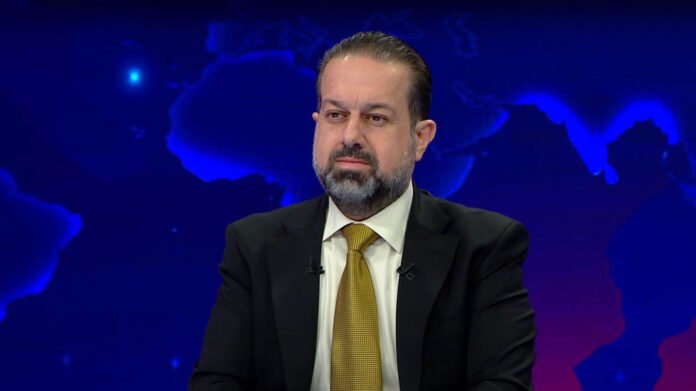
Rebaz Hamlan, Financial Advisor to the Kurdistan Region’s Prime Minister, confirmed that discussions between Erbil and Baghdad about the Kurdistan Region’s non-oil revenues are still ongoing. He also announced that civil servant salaries will be paid this week, following a commitment made by Iraqi Prime Minister Mohammed Shia’ al-Sudani.
Hamlan explained that around 120 billion dinars in non-oil revenues are ready for deposit. “Once the Iraqi Council of Ministers formally instructs the Ministry of Finance to release Kurdistan’s salaries, the Central Bank of Erbil will transfer the amount,” he said.
However, Hamlan criticized several Kurdish political factions for mishandling the salary issue. He claimed that, except for the Kurdistan Democratic Party (KDP), most parties have surrendered the Region’s financial rights to Baghdad. “If there had been internal unity, Baghdad wouldn’t have such influence over Kurdistan’s finances,” he argued.
He stressed that the KDP plays a crucial role in preserving the Region’s political and economic stability. “The survival of the Kurdistan Region is largely guaranteed by the Kurdistan Democratic Party,” he said, underlining the importance of cooperation and strong leadership.
Hamlan expressed frustration with Prime Minister Sudani, saying he has failed to uphold the promises made to Kurdish leaders. “President Masoud Barzani and Prime Minister Masrour Barzani have offered consistent support, but Sudani has not honored his commitments,” Hamlan noted.
He also reflected on his resignation as Deputy Minister of Finance, stating that he would not have stepped down if Sudani had respected the constitutional rights of the Kurdistan Region.
Earlier this month, Sudani met with several federal ministers, including Fuad Hussein, Bangin Rekani, and Khalid Shwani, to discuss the payment of August salaries for Kurdistan Region employees. The meeting emphasized Iraq’s responsibility to implement fair mechanisms for disbursement.
Despite ongoing talks, tensions remain high as Kurdish officials urge Baghdad to meet its obligations. The issue of non-oil revenues continues to be central to discussions about financial independence and fair treatment within Iraq’s federal framework.