
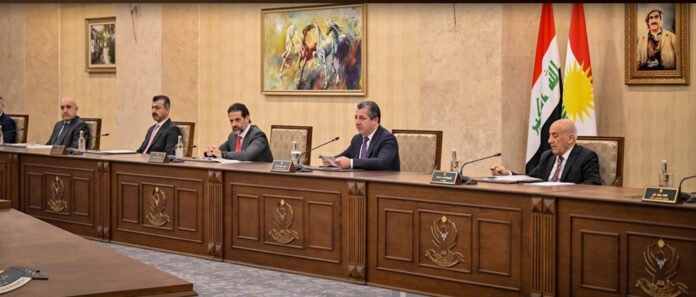
The KRG Council of Ministers Calls for Recognition of 14.1% Population Share Council of Ministers reviewed the latest census results and formally called for recognition of the 14.1% population share. Officials stressed that federal authorities must adopt the new figures in budget calculations and national planning. Moreover, they emphasized that recognition of the 14.1% population share reflects constitutional fairness.
Ministers confirmed that authorities conducted the census under a formal agreement between the federal government and the Kurdistan Region. In addition, the Iraqi Federal Council of Ministers endorsed the process through several official decisions. Therefore, the Council stated that the results carry full legal legitimacy and institutional backing.
During the session, officials discussed the financial implications of the 14.1% population share. They explained that federal budget allocations must align with updated demographic data. Consequently, they urged Baghdad to implement the figure in revenue distribution and fiscal planning. Ministers argued that accurate population data ensures equitable treatment across Iraq.
Furthermore, the Council highlighted the importance of demographic transparency. Census data supports infrastructure planning, public service delivery, and long-term economic strategy. As a result, recognition of the 14.1% population share strengthens national governance and administrative efficiency.
Officials also reaffirmed their commitment to constructive dialogue with federal institutions. However, they warned that ignoring the 14.1% population share could create political friction. Therefore, they called for responsible cooperation to safeguard stability between Erbil and Baghdad.
In conclusion, the KRG Council of Ministers described the census as a joint national process. It urged federal authorities to formally recognize the 14.1% population share without delay. Ultimately, ministers stressed that fair implementation remains essential for constitutional partnership and sustainable political stability.