
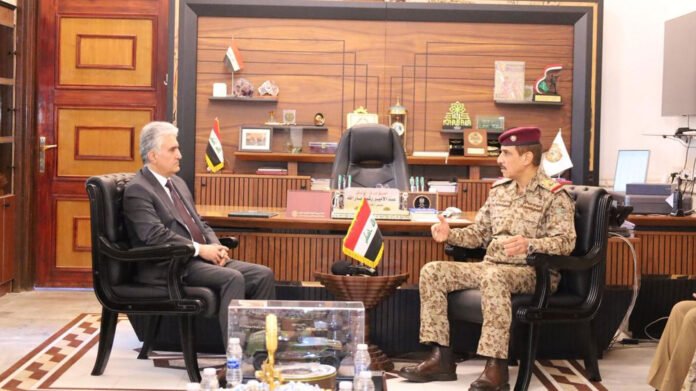
Kurdistan Region Interior Minister Rebar Ahmed traveled to Baghdad on Monday, where he held a key security meeting with Iraqi Army Chief of Staff Lt. Gen. Abdul Amir Rashid Yarallah. Both officials agreed to strengthen operational coordination between the Peshmerga and federal forces.
They began by reviewing the current domestic security landscape. They then discussed ways to deepen military cooperation in areas of shared responsibility. Their talks focused on enhancing field coordination and intelligence sharing. They also prioritized strengthening border security against external threats.
In addition, the two officials discussed expanding joint efforts to combat ISIS remnants and organized crime. The meeting carried significance beyond routine military consultations. Historically, overlapping responsibilities have created security vulnerabilities that extremist groups sought to exploit. Strong institutional coordination helps prevent those gaps from re-emerging.
According to an official statement, Ahmed and Yarallah examined specific mechanisms to improve field operations. They placed particular emphasis on eliminating security vacuums and tracking active ISIS cells in remote areas.
The officials also addressed threats posed by cross-border criminal networks. At the conclusion of the meeting, they praised the existing level of cooperation and reaffirmed their commitment to maintaining regular joint operations. Their shared goal is to preserve the security gains achieved through years of cooperation and sacrifice.
The meeting formed part of a broader series of security consultations in Baghdad. Earlier that day, Ahmed met with Iraqi National Security Service Director Basim al-Badri. During that meeting, both sides also emphasized closer coordination between federal and regional security institutions. These efforts aim to strengthen cooperation between Iraq’s military and intelligence agencies.
For international partners, this growing cooperation reflects a commitment to long-term stability. The Kurdistan Region occupies a strategically important position along Iraq’s northern frontiers, making effective coordination essential to regional security. Continued dialogue between Baghdad and Erbil remains central to preserving national stability and countering terrorism.