
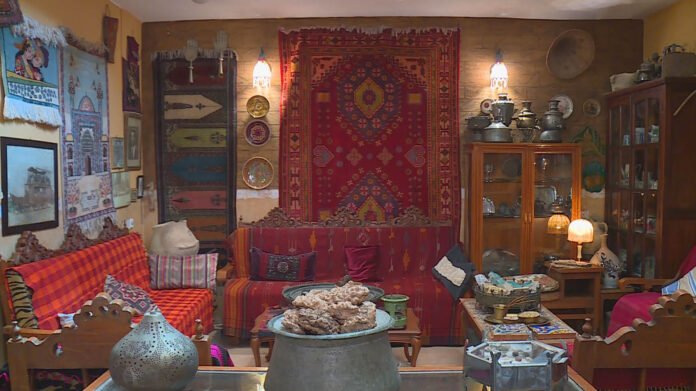
In the heart of Erbil, a remarkable project is safeguarding Kurdish heritage. Zhila Zangana, a dedicated archivist, has single-handedly created a museum dedicated to Kurdish culture. She envisions this space not just as a collection of objects, but as a dynamic community center. Furthermore, she plans to host lectures and cultural activities there regularly.
Zangana’s passion for preservation began early in her life. She recalls her childhood home vividly. “My father’s house was like a museum itself,” she explained. It was filled with valuable historical artifacts. Consequently, this environment sparked a deep interest in her. She felt a strong desire to continue this tradition of collection.
Her family actively supported this growing interest. Her father provided constant encouragement from the beginning. Moreover, her grandmother and aunts also motivated her significantly. However, she soon realized she needed a dedicated space. Therefore, she decided to transform a property she owned.
She located a suitable old house for her ambitious project. Then, she began the meticulous process of conversion. The museum now stands as a testament to her perseverance. Importantly, she received no institutional backing for this endeavor. She accomplished everything through her own personal effort and resources.
A large portion of the collection has deep family connections. Many artifacts originally belonged to her grandmother. Other pieces came directly from her father’s personal collection. These items possess significant historical value. Specifically, their histories stretch back to the Safavid and Qajar eras.
Zangana did not limit her search to family heirlooms. She also actively collected pieces from across various regions of Iraq. As a result, the museum now boasts a diverse array of precious antiquities. Each piece helps tell a broader story of Kurdish life and artistry.
Looking ahead, Zangana has even greater ambitions for the site. She ultimately wants to establish a formal documentation center. This center would specifically preserve records related to Kurdish culture. She passionately believes that culture forms the core of identity. For her, it is a vital expression of homeland and nationhood.