
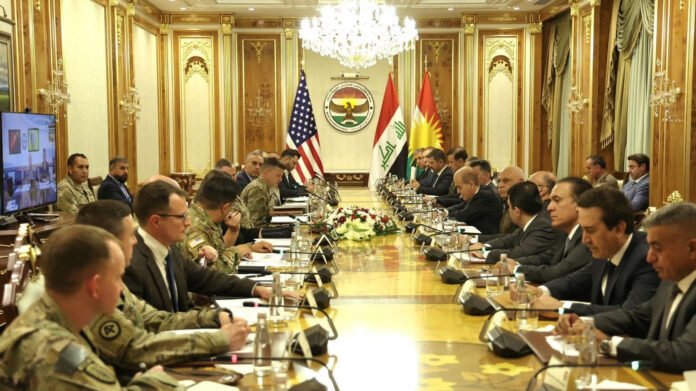
The Kurdistan Region and the United States are intensifying efforts to complete the Peshmerga reform process. Both sides highlighted the importance of unifying the Peshmerga forces and ensuring reforms are carried out successfully.
On Tuesday, Kurdistan Region officials met with a US military and diplomatic delegation to review the final stages of the Peshmerga reform plan. The Kurdistan Region Presidency confirmed that the talks focused on accelerating progress, overcoming obstacles, and strengthening coordination. The two sides stressed their shared commitment to building a modern and professional force.
This meeting came a day after Prime Minister Masrour Barzani assessed the ongoing unification of the Peshmerga. He welcomed the reforms achieved so far but underlined the urgent need to complete the process. Barzani emphasized that the Peshmerga must be fully unified under the Ministry of Peshmerga Affairs to guarantee efficiency and professionalism.
As part of the new measures, all Peshmerga forces will now use a single accounting system within the Ministry. The Kurdistan Regional Government (KRG) Ministry of Finance and Economy will oversee the system. Officials believe this step will boost transparency and financial management.
The reform process is rooted in long-standing challenges. Although the Peshmerga are officially under the KRG Ministry of Peshmerga Affairs, in practice they remain divided between the Democratic Party of Kurdistan (KDP) and the Patriotic Union of Kurdistan (PUK). Since 1992, unification has been a priority, but partisanship has slowed progress.
In 2022, the KRG and the US signed a Memorandum of Understanding (MoU) setting 2026 as the target for full unification. Significant strides have been made since then, but political divides and external threats continue to pose obstacles.
Still, the Kurdistan Region and the United States remain determined. Both sides view the Peshmerga reform as essential for stability, transparency, and defense readiness. The unified force is expected to strengthen the region’s security while ensuring accountability and modernization.