
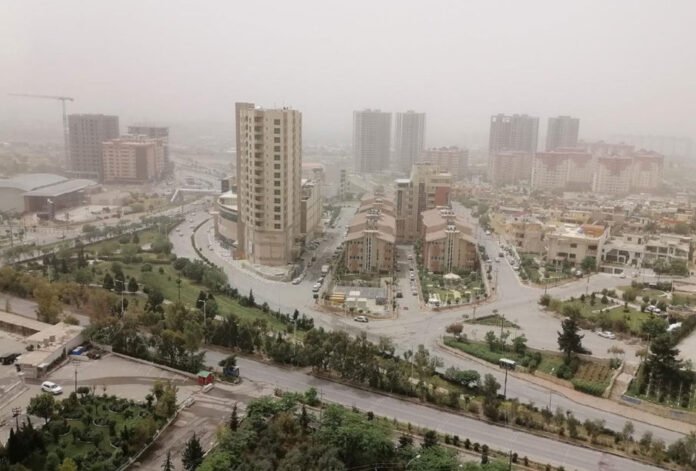
The Kurdistan Region is preparing for a strong dust storm that will sweep across its cities from Friday night into Saturday morning. Meteorologists warn that the dust storm may affect several areas, causing visibility problems and health concerns.
Wind speeds are expected to range between 30 and 55 kilometers per hour, pushing dust from western regions into urban and rural areas of the Kurdistan Region. Officials urge residents to take precautions, especially people with respiratory conditions.
Meteorologist Pashtiwane Penjweni said most areas will feel the impact of the dust storm. “Some parts of Duhok province may experience moderate to weak effects, but the storm will be severe elsewhere,” he explained. He also noted that skies will turn hazy, and turbulence in the atmosphere will intensify during the night.
By Friday night, the dust storm will strengthen and continue into Saturday morning, covering large parts of the Kurdistan Region. Officials predict that conditions will gradually improve after sunrise, though minor dust effects may linger throughout the day.
In addition to the dust storm, light rain and occasional thunder are expected in mountainous areas near Duhok, Erbil, and Raparin. These early rains may affect travel and outdoor activities. Authorities advise drivers to be cautious due to reduced visibility and slippery roads in affected areas.
Meteorologists also predict heavy rainfall in the last ten days of September in the region’s mountainous and border areas. For some regions, this may mark the first rain of the year, while other areas may not see rain until late October. This early precipitation could benefit agriculture but may also increase the risk of flash floods in low-lying areas.
Officials emphasize that residents should monitor local weather updates and follow safety instructions. Dust storms and early rain events are becoming more frequent, highlighting the need for public awareness and preparedness.
This dust storm forecast serves as a reminder of the Kurdistan Region’s variable weather patterns, where sudden wind events and early seasonal rainfall can affect daily life, transportation, and public health.