
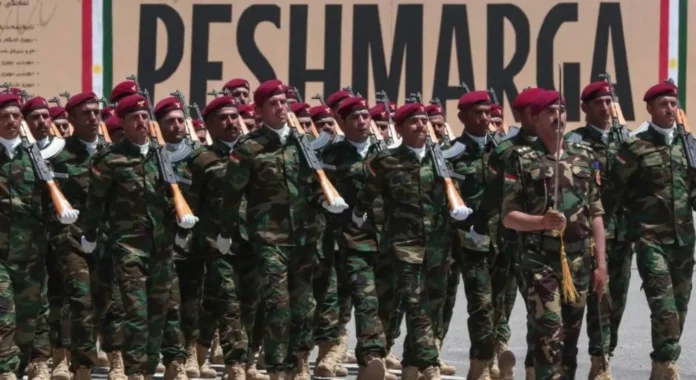
Kurdistan Regional Government (KRG) officials announced that progress in Peshmerga reforms will take place in the coming weeks. The reforms aim to unify forces affiliated with the two main political parties under the Peshmerga Ministry.
Lieutenant Colonel Bakhtiar Mohammed, secretary-general of the Peshmerga Ministry, said the process has been slow. “The reforms continue, but the pace does not meet our expectations or those of the Kurdistan people,” he stated. “However, within the next two months, meetings will occur, and agreements will lead to better management of the process.”
The plan includes forming two commands across the Kurdistan Region under the name of Davars, meaning “areas” in Kurdish. Both commands will fall under the Peshmerga Ministry, ensuring all forces operate under a unified structure. The reform will improve command organization and logistical support for the military units.
For years, the KRG has sought to merge its various Peshmerga units into a single professional and depoliticized force. The initiative enjoys strong international support, especially from the United States and the Global Coalition against Islamic State.
A key part of the effort is integrating Unit 70 and Unit 80, linked to the Patriotic Union of Kurdistan (PUK) and the Kurdistan Democratic Party (KDP). Together, these units make up over 100,000 Peshmerga troops. Previous attempts between 2010 and 2013 merged around 42,000 fighters into 14 brigades, but political disputes and the ISIS war delayed full unification.
The reform resumed in 2018 with a 35-point plan developed alongside coalition partners. Recently, US Consul General in Erbil Gwendolyn Green reaffirmed Washington’s support for the reforms and a secure, stable Kurdistan Region during a meeting with local officials.
The Peshmerga reforms aim to create a unified, professional, and politically neutral force, strengthening the security and stability of the Kurdistan Region.