
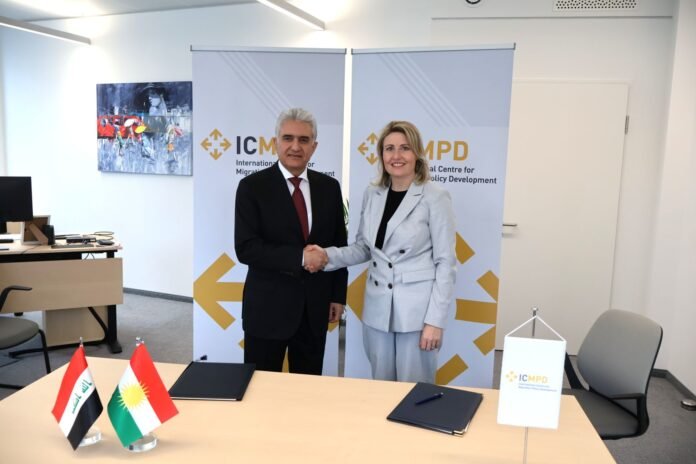
The Kurdistan Region has taken a new step to strengthen Kurdistan Signs Migration cooperation with an Austrian policy institution. Regional authorities signed a cooperation memorandum with the International Center for Migration Policy Development.
The agreement aims to expand joint work on migration management. It also focuses on institutional coordination and technical development. Officials described the memorandum as a strategic framework for long-term cooperation.
Moreover, representatives from the Kurdistan Regional Government attended the signing ceremony. Officials from the Austrian center also participated. Both sides emphasized shared goals and mutual interests.
According to officials, the memorandum prioritizes capacity-building initiatives. These initiatives will support institutions responsible for migration management. Consequently, authorities aim to improve efficiency and professional standards.
In addition, the agreement strengthens coordination with the Interior Ministry. Officials plan closer collaboration on migration policies and operational planning. Therefore, coordination mechanisms will receive structured support.
Furthermore, both sides agreed to exchange expertise and data. This exchange will help policymakers respond to migration challenges. As a result, decision-making processes should become more effective.
Officials highlighted the importance of addressing migration through cooperation. They stressed that migration affects security, economy, and social stability. Therefore, they called for practical and coordinated responses.
The Austrian center emphasized its experience in migration policy development. Representatives noted their work across multiple regions. They expressed readiness to share best practices and technical knowledge.
Meanwhile, Kurdistan Region officials welcomed the partnership. They described migration management as a growing priority. They also stressed the need for international cooperation.
In addition, the memorandum supports training programs for local institutions. These programs will enhance skills and institutional capacity. Consequently, authorities expect stronger migration governance.
The agreement also encourages joint research and analysis. Both sides plan to study migration trends and risks. Therefore, policies can rely on evidence-based approaches.
Moreover, officials discussed future projects under the memorandum. These projects may include workshops and technical assessments. They aim to align regional practices with international standards.
Observers noted that the agreement reflects expanding international engagement. They described the partnership as timely and strategic. They linked it to broader regional cooperation efforts.
In conclusion, the Kurdistan Region and the Austrian migration center formalized a cooperative framework. The memorandum focuses on coordination, capacity-building, and joint action. Consequently, both sides expect stronger migration governance and institutional development.