
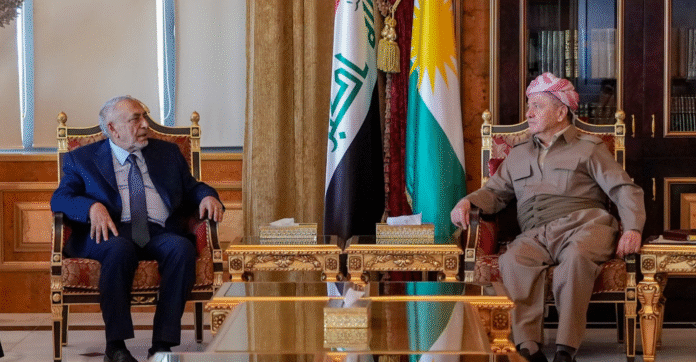
Kurdistan’s salary crisis continues to dominate political discussions, but recent developments signal progress. Kurdish leader Masoud Barzani and Iraqi Parliament Speaker Mahmoud al-Mashhadani both endorsed a joint proposal to end the crisis. During a meeting in Salahuddin, both leaders emphasized the urgency of resolving salary delays and financial disputes between Baghdad and Erbil.
Barzani urged lawmakers to support a final agreement. He stressed that resolving the Kurdistan salary crisis should not wait any longer. Meanwhile, al-Mashhadani described the issue as a humanitarian duty and insisted on separating salaries from political bargaining. The Kurdistan salary crisis, he said, impacts national unity and public trust.
Both sides agreed to form a joint mechanism for salary coordination. They also committed to developing clear, realistic proposals from both Baghdad and Erbil. They insisted on launching a unified review and follow-up process to ensure that salary distribution stays consistent and uninterrupted. These steps will help rebuild trust between the regional and federal governments.
Over the past years, financial tensions have persisted. The Kurdistan Region previously exported oil independently. However, recent rulings and budgetary disputes forced Erbil to cooperate with Baghdad. The Kurdistan salary crisis intensified after the federal government began demanding that revenues flow through the Iraqi oil marketing company SOMO.
In recent months, Kurdish authorities responded by increasing oil cooperation with Baghdad. Yet, delays in disbursing employee salaries continued. Barzani highlighted these delays as unacceptable and reaffirmed the Region’s willingness to find a lasting solution. He also praised Parliament’s readiness to support lawful agreements.
Al-Mashhadani echoed this sentiment and urged swift action. He emphasized that the Kurdistan salary crisis affects not only the Kurdistan Region but also Iraq’s political stability as a whole. Public-sector workers remain frustrated, and public protests have grown.
The two leaders concluded the meeting with a unified call to prioritize this issue. They emphasized transparency, accountability, and the importance of avoiding any further delays. The Kurdistan salary crisis, they warned, must be resolved now.