
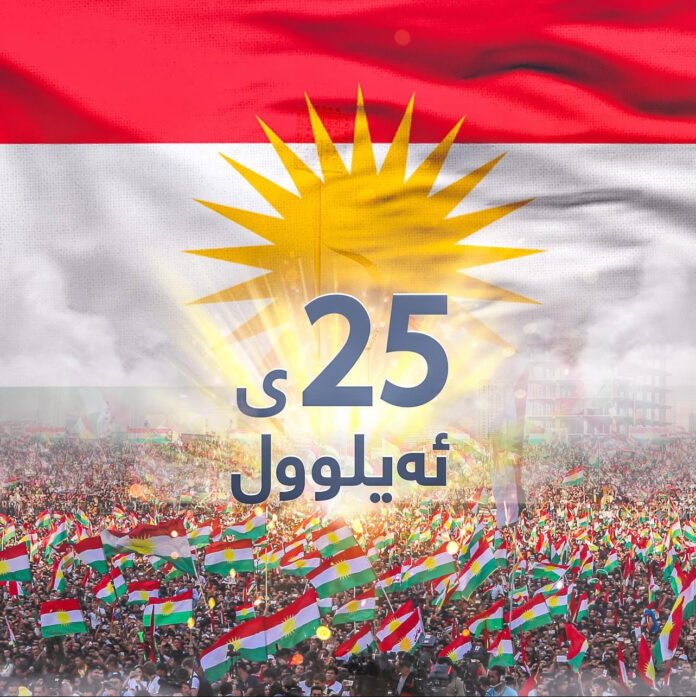
Kurdish leaders and citizens marked eight years since the 2017 independence referendum in the Kurdistan Region. Former Kurdistan President Masoud Barzani highlighted the enduring spirit of the Kurdish nation. He said the homeland exists not on maps but in the blood and sacrifices of its people.
Posting on his official X account, Barzani wrote: “The homeland is not a map on paper, but blood flowing through the veins. What you plant today, you will harvest tomorrow.” His message emphasized both the cost and promise of the Kurdish struggle for freedom, dignity, and statehood.
Earlier, Kurdistan Region Prime Minister Masrour Barzani issued a statement celebrating the referendum’s anniversary. He described September 25, 2017, as “a day of the brave decision of the people of Kurdistan, a day of the triumph of our national will, a day of hope and optimism.” He congratulated the people of Kurdistan, Peshmerga forces, and families of martyrs. He also paid tribute to Masoud Barzani for his leadership in organizing the referendum.
The 2017 vote asked whether the Kurdistan Region and disputed territories should separate from Iraq. Nearly 93% of voters supported independence, showing strong backing for Kurdish self-determination. Kurds worldwide celebrated the referendum, but Baghdad rejected it. Neighboring states also opposed the vote, while international powers expressed caution over potential instability.
Following the referendum, Iraqi federal forces and allied militias retook parts of disputed territories, including Kirkuk. These actions reversed some territorial gains Kurds had achieved during the fight against ISIS. Despite setbacks, many Kurds continue to view the referendum as a legitimate expression of their right to self-determination.
Eight years later, the referendum remains a historic milestone. It highlights the resilience of the Kurdish people and shapes the Kurdistan Region’s politics, relations with Baghdad, and international diplomacy. The anniversary serves as a reminder of the Kurdish nation’s aspirations and hope for eventual statehood.