
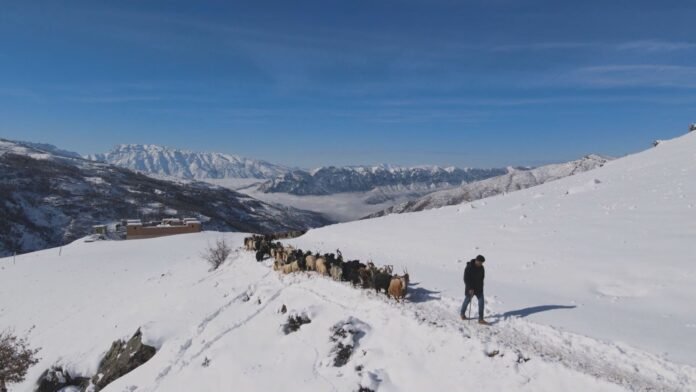
Heavy snowfall across Kurdistan’s rural areas has renewed hope for stronger water reserves and a productive spring season. Kurdistan Snowfall Villagers and agricultural experts welcomed the snow despite difficult living conditions during winter.
In Girtk village, residents faced harsh weather while caring for livestock. Families worked daily to clear snow and secure animal shelters. They relied heavily on stored fodder to keep livestock healthy.
Moreover, villagers described the snowfall as exhausting yet necessary. They explained that snow provides long-term benefits for farming and grazing. Therefore, many accepted the hardship with cautious optimism.
Local farmers emphasized the importance of snow for groundwater levels. Snowmelt slowly feeds wells and springs. As a result, water availability often improves during spring and summer.
In addition, Kurdistan Snowfall agricultural experts highlighted the role of snowfall in soil recovery. Snow protects soil from erosion and retains moisture. Consequently, fields remain fertile for planting.
Livestock owners also expressed hope for better grazing conditions. Snow supports grass growth once temperatures rise. Therefore, herders expect improved pastures in the coming months.
However, winter conditions continue to strain rural communities. Roads often remain blocked for days. This situation complicates access to markets and medical services.
Villagers noted that government support plays a vital role during heavy snow. Authorities provided fodder and logistical assistance in several areas. As a result, many families managed to sustain their animals.
Furthermore, local officials stressed preparedness for extreme weather. They encouraged communities to store sufficient feed and fuel. They also emphasized coordination with emergency services.
Meteorologists predicted continued snowfall in mountainous regions. They explained that sustained snow coverage benefits reservoirs. Therefore, dam levels may rise significantly.
Water experts welcomed these forecasts. They noted that previous dry years reduced reserves. Consequently, snowfall offers a chance to restore balance.
In addition, farmers began preparing spring plans early. They monitored snow depth and soil conditions. They expect improved crop yields if weather patterns remain stable.
Meanwhile, rural schools adjusted schedules due to weather disruptions. Teachers coordinated with families to ensure student safety. Communities showed resilience through cooperation.
Observers noted the contrast between hardship and hope. Heavy snow challenged daily life yet promised future gains. Therefore, many residents viewed the season positively.
In conclusion, snowfall brought both difficulty and opportunity to Kurdistan’s rural areas. Villagers endured harsh conditions while focusing on long-term benefits. As spring approaches, hopes remain high for strong harvests and stable water supplies.