
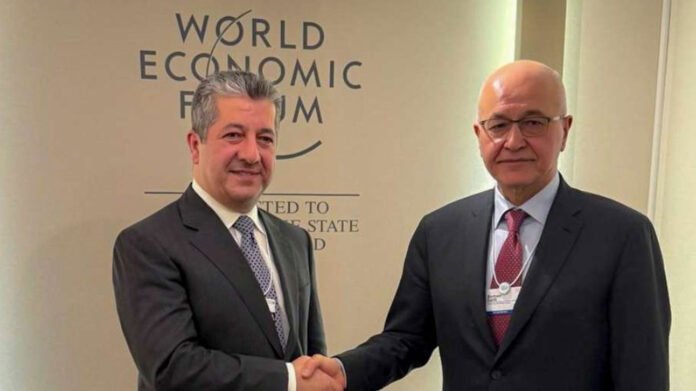
Davos, Switzerland – Kurdistan PM Barzani met with UN High Commissioner for Refugees Filippo Grandi during the 2026 World Economic Forum. The leaders discussed the growing displacement crisis in the region and strategies to support affected populations.
During the meeting, PM Barzani highlighted the urgent need to address humanitarian challenges caused by ongoing conflicts. He stressed that instability, particularly due to ISIS activity, continues to threaten civilians and exacerbate displacement. Moreover, he emphasized that coordinated international action is essential to prevent further suffering.
High Commissioner Grandi expressed concern over the increasing number of displaced families in northern Syria and the Kurdistan Region. He underlined that renewed violence could trigger new waves of migration and strain humanitarian resources. Additionally, he emphasized that protecting vulnerable populations must remain a top priority for all stakeholders.
PM Barzani stressed the Kurdistan Region’s commitment to supporting displaced persons. He highlighted efforts to provide shelter, food, and healthcare for refugees. Furthermore, he encouraged international partners to increase funding and logistical support to sustain humanitarian programs.
The leaders also discussed security threats posed by ISIS militants. They agreed that regional instability could undermine reconstruction and relief efforts. Both sides emphasized that cooperation between local authorities and international agencies is essential to prevent further crises.
Additionally, PM Barzani called for long-term solutions to displacement. He advocated for rebuilding infrastructure, promoting economic recovery, and creating safe conditions for refugees to return home. Grandi supported these initiatives, noting that sustainable solutions require joint political, economic, and humanitarian strategies.
Observers noted that the meeting reflects Kurdistan’s proactive role in addressing regional crises. Analysts highlighted that collaboration with the UN strengthens Kurdistan’s capacity to manage displacement and mitigate threats posed by extremist groups.
Both leaders concluded by pledging continued cooperation. They emphasized that dialogue, humanitarian support, and coordinated security measures are crucial to protect civilians and stabilize the region.