
ERBIL, Kurdistan Region – Many people around the world live with diabetes. During the holy month of Ramadan, many Muslim patients feel concerned about fasting and its effects on their health.
Some diabetics worry that fasting could harm their eyesight. Others ask whether they can safely observe the fast. Medical specialists say the answer depends on each patient’s condition and how well their blood sugar is controlled.
Dr. Goran Hussein Barzinji, a specialist in diseases and eye surgery, explained that diabetes can damage the small blood vessels inside the eye when blood sugar remains high for long periods.
As a result, several eye conditions may develop.
One of the most common problems is diabetic retinopathy. This condition occurs when fragile blood vessels in the retina become damaged or start bleeding. In addition, diabetes can lead to swelling of the macula, the central area of the retina responsible for detailed vision. This can cause blurred sight.
Patients with diabetes may also develop cataracts or glaucoma earlier than others.
However, Dr. Barzinji stressed that fasting itself does not directly damage the retina. Instead, the main concern is unstable blood sugar levels during Ramadan.
If blood sugar rises too high or drops too low between the pre-dawn meal (suhoor) and sunset meal (iftar), vision problems may worsen. Therefore, diabetics should consult a doctor before deciding to fast.
According to the specialist, some patients should avoid fasting altogether. These include people with uncontrolled diabetes, kidney disease, or advanced eye complications that require regular eye injections.
Meanwhile, patients with stable type-2 diabetes may be able to fast with caution. This is especially possible if they control their condition with diet or oral medication.
Doctors recommend several precautions for those who choose to fast.
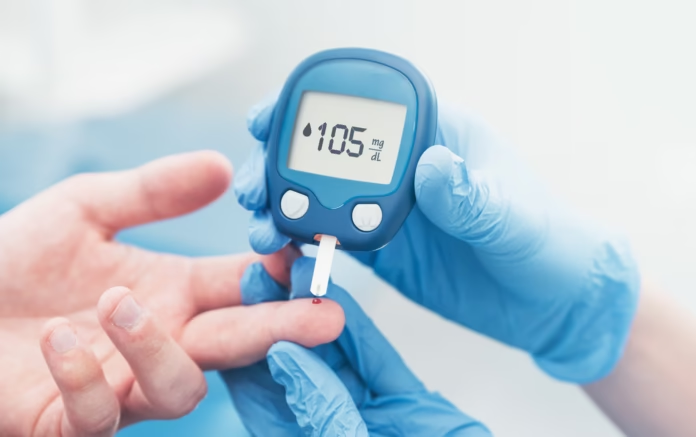
First, patients should check their blood sugar three to four times per day.
Second, they should drink enough water between iftar and suhoor to prevent dehydration.
Third, they should limit sugary foods and instead eat balanced meals rich in protein and vegetables.
Dr. Barzinji also warned that fasting should stop immediately if blood sugar falls below 70 or rises above 300. Severe dizziness or weakness is also a sign that the fast should be broken and medical care sought.
Ultimately, doctors say that safe fasting depends on proper monitoring and medical advice.