
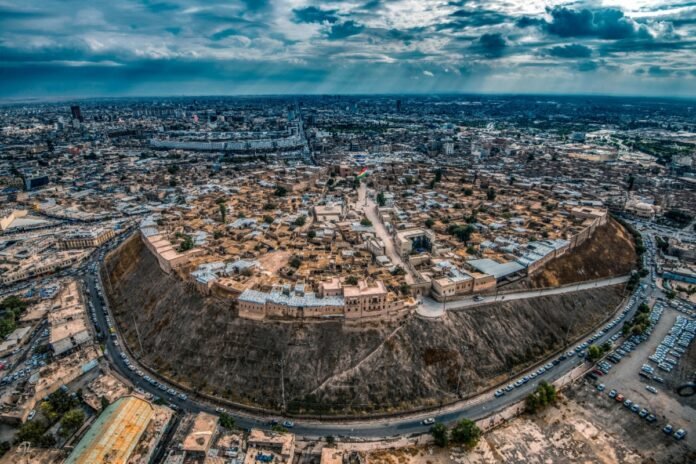
Environmental authorities in the Kurdistan Region report a clear improvement in air quality in Erbil after most illegal oil refineries stopped operating. Officials say the shutdowns have reduced pollution levels, although they warn that waste management challenges remain and public cooperation is still essential.
The Kurdistan Region’s Environment Board says it has identified 153 illegal refineries across the region. Of these, 139 operate in Erbil and 14 in Duhok. Sanaan Abdullah, spokesperson for the board, said most of these facilities have now stopped working.
Officials confirm that the closures have significantly improved air quality, especially in Erbil province, where illegal refineries were previously concentrated. They say pollution levels have dropped noticeably compared to previous years.
Dilshad Hirani, head of Erbil’s Environment Department, said authorities now consider all illegal refineries non-operational. He added that this change has greatly benefited the city’s environment and reduced harmful emissions. He noted that air pollution in the past reached dangerous levels but has now improved.
Hirani explained that Erbil previously recorded an Air Quality Index of around 180, which the US Environmental Protection Agency classifies as unhealthy. He said current readings now range between 50 and 60 on normal days, which falls near acceptable levels. The city currently relies on Swiss IQAir data because it does not yet have a fixed monitoring station.
Authorities also credit the Kurdistan Regional Government’s Runaki project for further improvements. The initiative has shut down 3,689 diesel generators and expanded 24-hour electricity supply. Officials say this step alone has reduced carbon emissions by about 690 tons per day and lowered soil and groundwater pollution.
Despite progress, officials stress that challenges remain. Abdullah said overall public health has improved, but authorities still need more studies to confirm long-term safety. He also said factories and restaurants must install smoke filters to reduce emissions further.
Waste management remains a major issue. Officials say Erbil alone produces about 7,000 tons of waste daily. Abdullah urged stronger public awareness and better environmental behavior, especially in public and picnic areas.
Recycling efforts continue, including asphalt, plastic, and paper processing facilities that aim to reduce waste and limit environmental damage.