
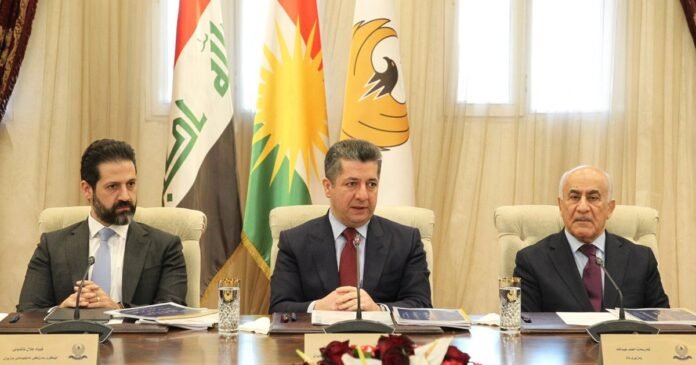
The Kurdistan Regional Government cabinet approved several measures during a meeting chaired by Prime Minister Masrour Barzani. As a result, officials moved to strengthen institutional coordination and accelerate discussions on key economic files.
The cabinet approved the formation of a permanent ministerial coordination committee to improve cooperation among government institutions. Moreover, officials said the committee would support faster decision-making and enhance policy implementation. Therefore, the government aims to increase efficiency across ministries.
The cabinet coordination agenda remained a major focus throughout the meeting. In addition, the cabinet reviewed several outstanding issues that require continued engagement with federal authorities. Consequently, leaders emphasized the importance of maintaining dialogue and practical cooperation.
Prime Minister Masrour Barzani urged federal partners to speed up efforts related to oil exports. Furthermore, he highlighted the importance of resolving the issue through mutual understanding and adherence to agreed frameworks. As a result, the cabinet called for swift progress on this strategic matter.
The meeting also addressed the long-delayed customs agreement between Erbil and Baghdad. Moreover, cabinet members stressed that implementing the agreement could support economic activity and facilitate smoother commercial procedures. Therefore, they encouraged both sides to finalize the remaining steps.
The cabinet coordination agenda also focused on improving institutional performance. In addition, ministers discussed mechanisms that could strengthen communication and follow-up among government bodies. Consequently, officials expressed confidence in the committee’s ability to support more effective governance.
Prime Minister Barzani emphasized the importance of cooperation in addressing shared challenges. Furthermore, he noted that coordination between institutions often leads to better outcomes for citizens. As a result, the cabinet reaffirmed its commitment to collective action.
Officials also underlined the significance of constructive engagement with Baghdad on economic and administrative matters. Moreover, they stated that progress on unresolved issues would benefit broader stability and development efforts. Therefore, they supported continued negotiations.
Observers note that coordination mechanisms can improve government responsiveness and reduce administrative delays. In addition, agreements on oil and customs matters could influence economic planning and public services. Consequently, these discussions attracted significant attention.
The cabinet coordination agenda reflected the government’s effort to strengthen internal cooperation while advancing dialogue with federal authorities. Furthermore, the meeting highlighted the importance of practical solutions to longstanding issues. As a result, officials expressed hope for measurable progress in the coming period.