
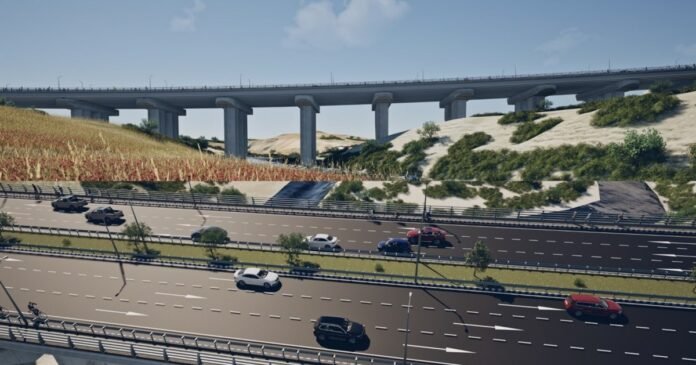
The Kurdistan Regional Government Masrour Barzani has completed 810 road projects since 2019, marking one of the region’s largest infrastructure campaigns in recent years. As a result, thousands of kilometers of roads now connect cities, towns, and rural communities more efficiently.
Officials stated that more than 3,000 kilometers of roads have been built or rehabilitated through continuous investment in the transportation sector. Moreover, these projects have improved mobility and strengthened links between different parts of the Kurdistan Region. Therefore, residents and businesses now benefit from better access and safer travel routes.
Kurdistan road development remained at the center of the government’s infrastructure strategy. In addition, authorities allocated substantial financial resources to modernize road networks and address growing transportation needs. Consequently, road construction has become a major component of development efforts.
Many of the completed projects carry strategic importance because they connect urban centers with smaller districts and villages. Furthermore, these routes support trade, tourism, and public services across the region. As a result, improved infrastructure contributes to broader economic activity.
The Kurdistan road development initiative has relied on multiple funding mechanisms. Moreover, officials have financed projects through investment budgets, regular transportation allocations, and a share of revenues dedicated to road improvements. Therefore, the government has maintained work on infrastructure despite financial pressures.
Authorities also continued work on major projects that remain under construction. In addition, strategic road schemes covering thousands of additional kilometers continue to move through implementation stages. Consequently, the transportation network is expected to expand further in the coming years.
Road safety formed another important part of these efforts. Furthermore, officials introduced measures to improve driving conditions and reduce risks for motorists and pedestrians. As a result, teams carried out road marking operations, installed thousands of traffic signs, added protective barriers, and constructed pedestrian crossings.
Masrour Barzani Kurdistan PM, Kurdistan road development has also supported regional integration by strengthening connections between communities. Moreover, improved transportation routes have helped reduce travel times and facilitated movement for commercial activities. Therefore, infrastructure investment continues to shape daily life across the region.
Economic observers often view transportation projects as drivers of long-term growth. In addition, efficient road systems can encourage investment, create employment opportunities, and support private sector expansion. Consequently, infrastructure development remains closely tied to economic progress.
The completion of 810 projects reflects the government’s emphasis on modernizing essential services and expanding public infrastructure. Furthermore, ongoing investments signal a continued commitment to development and connectivity. As a result, Kurdistan road development remains a key priority for the region’s future growth.