
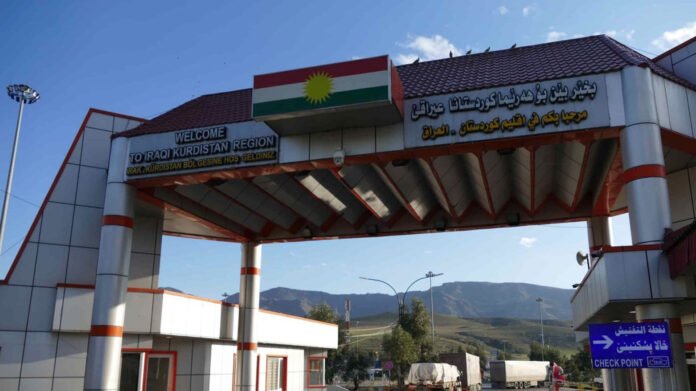
The Kurdistan Regional Government and the Iraqi federal government are finalizing a transformative border management agreement. Technical delegations completed ninety-seven percent of the procedural work to deploy a unified digital platform. This breakthrough will implement the automated system for customs data across all regional border crossings. The final framework currently awaits official approval from Iraq’s Ministerial Council for Economy.
This collaborative initiative represents the most significant economic coordination since the 2005 constitutional adoption. Both governments actively seek to modernize trade infrastructure and establish a highly transparent economic framework. Consequently, the new system will successfully eliminate bureaucratic red tape and sharply reduce corruption.
Strategic diplomatic talks catalyzed the recent acceleration in cross-border customs negotiations. Kurdistan Regional Government Prime Minister Masrour Barzani recently visited Baghdad to articulate regional integration willingness. However, the Prime Minister explicitly conditioned this commitment on safeguarding Kurdish constitutional rights. Therefore, balancing federal integration with regional sovereignty became the absolute linchpin of this historic accord.
The sweeping framework thoroughly covers eight primary economic sectors including agriculture and industry. Furthermore, the administrative initiative standardizes customs tariffs across every single international entry point. To protect local markets, representatives from both capitals will jointly manage these border points. This joint mechanism effectively prevents unilateral tariff decisions that could disadvantage regional merchants.
The ASYCUDA customs system implementation utilizes an advanced platform from the United Nations. This digital network automates cross-border commerce to provide real-time oversight of trade flows. Additionally, the software generates unassailable shared data regarding non-oil border revenue collection. Both governments will split these collected non-oil border revenues evenly on a fifty-fifty basis.
The unified network will allow Kurdish traders to obtain automated registration codes quickly. As a direct result, businesses will easily bypass the prolonged bureaucratic delays of the past. Furthermore, authorities will permanently dismantle four temporary internal customs checkpoints after full deployment. Legitimate customs transactions will officially process within twenty-four hours under the digital system.
The ASYCUDA customs system implementation also introduces critical financial oversight mechanisms. By integrating advance customs declarations with central bank tracking, authorities will actively combat money laundering. Officials expect the entire network to become fully operational within the next four months. Ultimately, this shared economic interest successfully bridges deep-seated institutional divides between Erbil and Baghdad.