
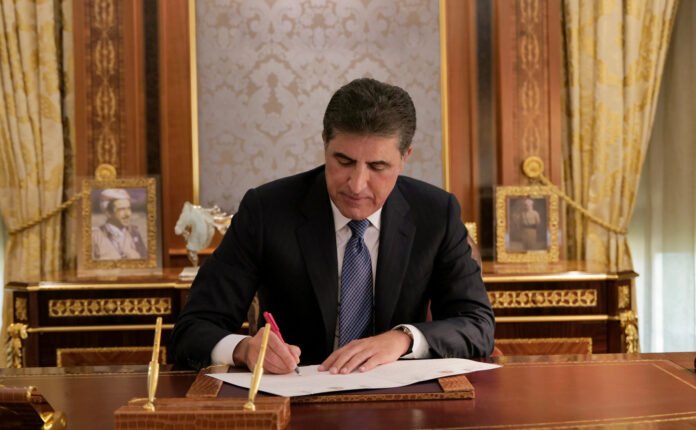
Kurdistan Region President Nechirvan Barzani signed a presidential decree promoting 910 officers serving in the Kurdistan Region Security Council. The decision highlights the leadership’s commitment to strengthening professional security institutions across the Kurdistan Region.
The Presidency completed the promotions after officers met all legal service requirements. Officials also confirmed that every eligible officer completed the required tenure before receiving promotion.
The decree follows the regulations governing the Kurdistan Region Presidency. Therefore, the promotion process reflects established legal procedures and supports transparent institutional management.
The Kurdistan Region Security Council coordinates security policies and strengthens cooperation among security agencies. In addition, it supports intelligence coordination and helps maintain stability throughout the region.
The latest promotions strengthen the council’s leadership structure. Furthermore, they create new opportunities for experienced officers to assume greater responsibilities across different departments.
Government officials consider career advancement an important part of institutional development. As a result, regular promotions encourage professional growth, reward experience, and improve operational readiness.
President Nechirvan Barzani continues supporting reforms that improve public institutions through clear legal frameworks. Moreover, the latest decree aligns with broader efforts to increase efficiency and strengthen governance.
Security analysts often say professional promotion systems improve organizational performance. Likewise, experienced officers help institutions respond more effectively to evolving security challenges and changing operational demands.
The promotion of 910 officers ranks among the largest personnel advancement decisions in recent months. Consequently, the measure reinforces leadership continuity and supports long-term institutional stability.
The Kurdistan Region continues investing in administrative modernization alongside security sector development. Meanwhile, authorities continue improving coordination, training, and professional standards across public institutions.
Officials expect the newly promoted officers to begin their expanded responsibilities after the decree takes effect. Looking ahead, the Presidency will likely continue applying the same legal standards during future promotion cycles. This approach supports merit-based advancement, strengthens institutional confidence, and encourages long-term professional excellence within the Kurdistan Region Security Council.