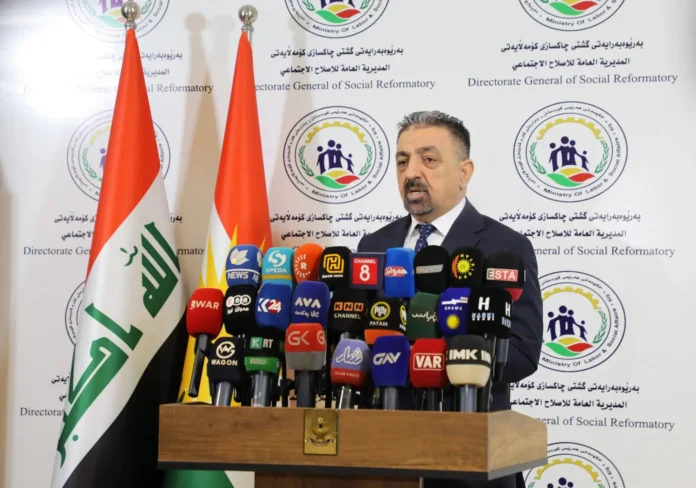
The General Director of the Kurdistan Region’s reformatories, Ihsan Baban, shared new data on Monday, presenting adult, women’s, and juvenile incarceration figures during a recent press conference. The report covered the three main provinces of Erbil, Sulaimani, and Duhok.
During the first six months of this year, 4,094 inmates entered correctional facilities across the Kurdistan Region. Meanwhile, authorities completed 3,565 inmate release procedures, allowing these individuals to safely return to their families. In addition, the correctional system conditionally released 676 other inmates during the same period.
The General Directorate of Social Reform directly supervises these facilities, which house inmates while providing essential rehabilitation, education, and healthcare services. These programs aim to help individuals successfully reintegrate into society.
Rehabilitation efforts achieved notable results over the past six months. A total of 226 inmates joined drug addiction support groups and received medical treatment. Furthermore, 10 inmates were released under a special pardon.
Education also remained a key component of the reform process. A total of 534 inmates attended reformatory schools, while inmates made 35,864 visits to correctional facility libraries for educational purposes.
The directorates also worked to improve facilities and expand programs. They organized 238 training courses, seminars, and workshops for both staff members and inmates. Additionally, religious leaders delivered 73 sermons inside the centers.
The Kurdistan Region continues to face growing challenges from international narcotics networks. Drug traffickers are using the region as both a destination and a transit route, with trafficking routes connecting Southwest Asia, the Arabian Peninsula, and Europe. Authorities have also reported a rise in Captagon trafficking from neighboring Syria, contributing to an increase in domestic drug consumption across the region.