
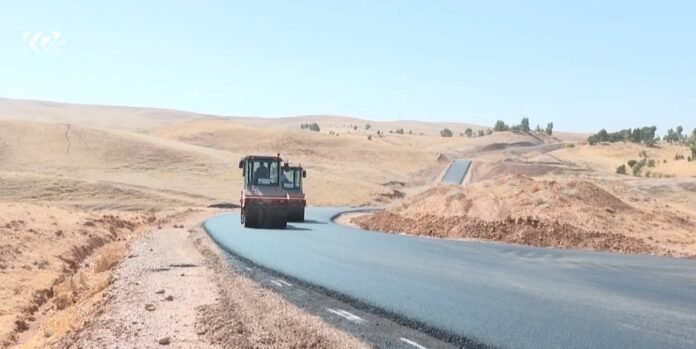
Major investments in rural road infrastructure by the local government transformed economic activity in Akre. The region successfully paved roads serving dozens of communities over the past seven years. Specifically, these initiatives cost a total of 42 billion Iraqi dinars.
The extensive projects connected 77 distinct villages to vital trade networks. As a result, the new roads improved access to local markets. This network also strongly supported construction, agriculture, and commerce.
Now, reliable road infrastructure drives rapid development in Akre’s rural communities. The changes allow farmers to transport crops and livestock products much faster.
Shaaban Mohammed, a local public employee, noticed a massive shift in daily life. He explained that extensive construction and development quickly followed the road paving. Consequently, residents now transport agricultural produce effortlessly to Akre’s wholesale market. In contrast, families previously lacked stability, forcing many to move to crowded cities.
Farmer Mohammed Yassin also described the project as a major turning point. He observed life and development returning to the villages in unexpected ways. Today, farmers market their diverse agricultural products smoothly without facing transportation obstacles.
Besides the massive economic impact, the expanded network encourages residents to remain in their hometowns. Ahmed Salih, a local teacher, believes basic infrastructure preserves rural communities. When people access reliable roads, they commit to staying on their ancestral lands. Additionally, these roads allow relatives to visit and participate in key social occasions easily.
Akre district contains approximately 242 villages. Currently, government authorities have paved or rehabilitated roads for nearly 80% of these communities.
Ultimately, these rural projects contributed to a 75% reduction in rural-to-urban migration. This impressive statistic proves that sustained infrastructure investment promotes long-term population stability.