
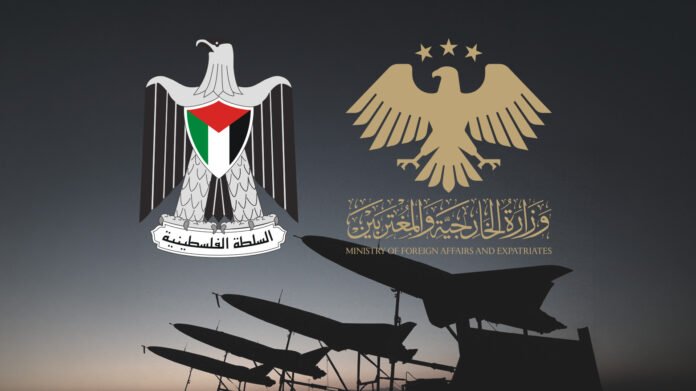
Diplomatic opposition to recent Iranian drone and missile strikes broadened significantly. Specifically, foreign ministry officials in Syria and the Palestinian Authority issued separate statements condemning the military operations. Both governments expressed strong solidarity with the Kurdistan Region while warning against further regional escalation. Furthermore, they emphasized that military strikes violate territorial sovereignty and contravene international law.
Syria’s Ministry of Foreign Affairs condemned attacks targeting several Gulf nations alongside the Kurdistan Region. Consequently, Damascus called for immediate adherence to international law to preserve peace across borders. Meanwhile, the Palestinian Authority described the aerial strikes as clear violations of regional sovereignty. Therefore, both authorities urged involved parties to return to diplomatic channels immediately.
Arab League Secretary-General Nabil Fahmy warned against expanding military operations throughout neighboring territories. He urged Iranian leaders to halt further strikes and prioritize regional stability over confrontation. Similarly, government representatives from the United Arab Emirates condemned the strikes and urged strict restraint. Furthermore, officials from the United States State Department strongly denounced the ongoing aerial bombardments over Erbil.
Air defense systems successfully intercepted numerous explosive-laden drones over the Kurdistan Region’s capital. Specifically, counter-terrorism forces confirmed that coalition defenses destroyed dozens of incoming drones over recent days. Furthermore, security agencies in Sulaimani province reported several missile strikes hitting rural districts without causing casualties. Consequently, defense forces remain on high alert while international leaders push for immediate de-escalation.
These joint diplomatic statements reinforce an emerging consensus among regional governments against continued aggression. Major international stakeholders continue demanding respect for sovereign boundaries to prevent a catastrophic regional conflict. Meanwhile, local security teams monitor potential threats while protecting civilian infrastructure across all major cities. Thus, regional leaders keep emphasizing dialogue as the only viable path toward long-term security.