
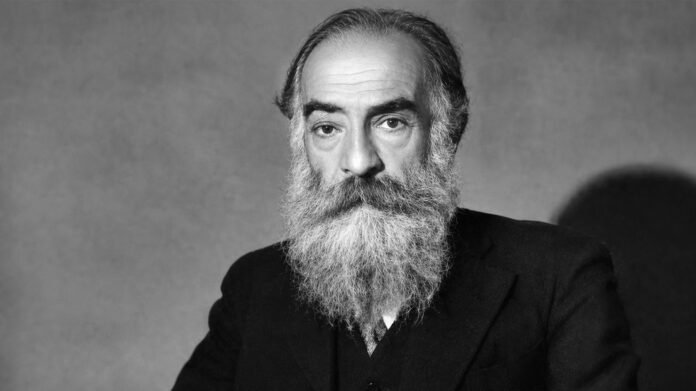
The Kurdistan Regional Government has announced plans to build a Joseph Orbeli statue, honoring the renowned scholar for his lasting contributions to Kurdish studies. Officials revealed the initiative after a meeting with Russia’s Consul General in Erbil. The project also reflects growing cultural cooperation between the Kurdistan Region and Russia.
The announcement followed talks between the Ministry of Culture and Youth and Russian Consul General Maxim Rubin. The meeting focused on expanding cultural partnerships and supporting future joint initiatives. Officials also reviewed ongoing cooperation in arts, education, and cultural exchange.
During the discussions, the ministry thanked the Russian Consulate for encouraging stronger cultural relations. Officials praised its support for Kurdish participation in cultural events held in Russia. They noted that such cooperation continues to strengthen international cultural connections.
Ministry spokesperson Namiq Hawrami explained that Kurdish sculpture student Hawar Ali first proposed the monument. Afterwards, the General Directorate of Culture in Halabja accepted responsibility for producing the statue. The proposal quickly gained official support because of Orbeli’s historic academic achievements.
Officials originally selected Halabja as the location for the monument. However, Consul General Rubin suggested installing the statue in Erbil instead. Consequently, ministry representatives proposed creating a second replica for Erbil. This solution would recognize both cities while preserving the original cultural plan.
Joseph Orbeli remains one of the most respected scholars in Kurdish academic history. He helped establish Kurdish studies as an independent academic discipline instead of treating it as part of broader Oriental studies. His work encouraged generations of researchers to study Kurdish language, history, and culture through dedicated academic institutions.
Orbeli also played an important leadership role in international scholarship. He served as director of the Hermitage Museum between 1934 and 1951. Later, he became the founding president of the Armenian National Academy of Sciences. His academic influence extended throughout the Soviet Union and beyond.
According to ministry officials, honoring Orbeli reflects the Kurdistan Region’s commitment to preserving Kurdish cultural heritage. The project also recognizes international scholars whose research promoted Kurdish identity worldwide. Officials believe the monument will strengthen cultural diplomacy while encouraging educational cooperation.
The ministry has not announced a final construction timeline or confirmed the statue’s permanent location. Nevertheless, officials expect discussions to continue with Russian representatives before completing the project. The Joseph Orbeli statue will stand as a lasting symbol of academic cooperation, cultural appreciation, and enduring friendship between the Kurdistan Region and Russia.