
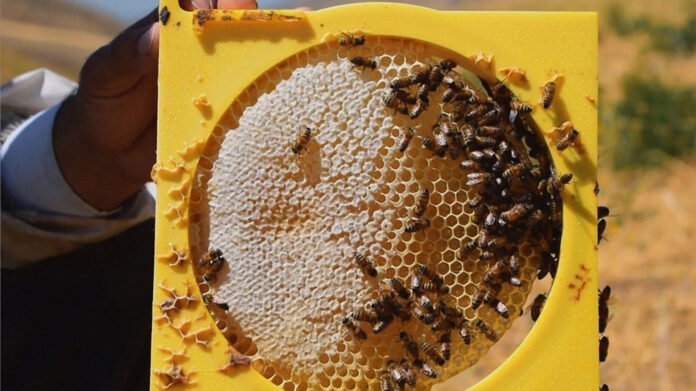
Kurdistan’s mountain honey industry recorded a strong recovery this season after abundant rainfall restored vegetation across the region. Improved environmental conditions increased honey production and renewed confidence among local beekeepers after several difficult drought years.
Veteran beekeeper Osman Majid Ahmed said favorable weather greatly improved this year’s honey harvest. Healthier landscapes also strengthened bee colonies and expanded natural nectar sources throughout the flowering season.
Ahmed has worked with bees for more than 40 years across the Kurdistan Region. He manages professional apiaries that breed bees and expand healthy colonies for future production.
According to Ahmed, successful beekeeping requires patience, technical knowledge, and constant observation throughout every season. Experienced beekeepers also understand bee behavior before making important decisions about colony management.
Harvesting starts only after bees complete their natural honey-making process inside carefully built wax combs. This method protects the honey’s quality, purity, and natural flavor throughout the collection process.
Kurdistan’s mountains provide excellent conditions because wild herbs, flowering shrubs, and native plants grow across wide areas. Consequently, bees collect nectar from diverse plants that create distinctive mountain honey with unique characteristics.
Recent rainfall restored vegetation after several years of drought damaged flowering plants across many rural districts. Therefore, stronger ecosystems improved nectar supplies and increased honey production during this harvesting season.
Environmental specialists consider bees reliable indicators of healthy ecosystems because thriving colonies depend on balanced natural conditions. Likewise, pollination supports agriculture while protecting forests, orchards, and many native plant species.
Beekeeping continues supporting rural livelihoods and creating additional income for farming families throughout the Kurdistan Region. Growing demand for natural products could also strengthen export opportunities for premium local honey.
Ahmed believes producers, environmental organizations, and government institutions should cooperate to protect the beekeeping industry. He added that preserving biodiversity remains essential for maintaining healthy bee colonies and sustainable honey production.
The successful harvest has increased optimism among local producers after several challenging years. Looking ahead, beekeepers expect continued environmental protection to strengthen Kurdistan mountain honey in domestic and international markets.