
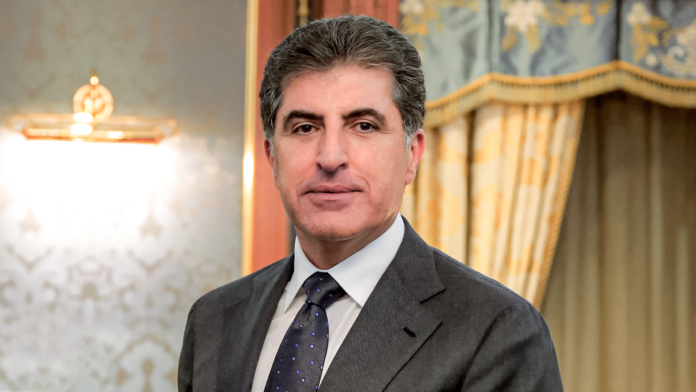
Kurdistan Region President Nechirvan Barzani said Iranian officials are ready to support Iraq’s efforts to place weapons under state control. He said Tehran is prepared to assist Prime Minister Ali al-Zaidi in addressing the issue.
Barzani made the remarks during an interview discussing his recent visit to Tehran. He said Iraqi Prime Minister Ali al-Zaidi had asked him to raise the issue with Iranian officials.
According to Barzani, Iranian officials responsible for Iraq confirmed their readiness to cooperate with Baghdad. He said he specifically asked whether their position represented Iran’s official policy.
Barzani said the officials confirmed that Iran would support efforts aimed at strengthening Iraq as a neighboring country. He also stressed that all weapons should remain under government authority.
The Kurdistan Region president said Iraq needs a unified security structure under the command of the prime minister. He argued that national challenges become more difficult when different armed groups operate independently.
Meanwhile, Barzani emphasized that stability in Iraq also serves Iran’s economic interests. He said Iran benefits from trade with Iraq and from selling electricity and gas.
Barzani estimated that Iran generates around $15 billion annually through its economic relationship with Iraq. Therefore, he argued that Tehran has a clear interest in maintaining Iraq’s stability.
The president also questioned the benefits that armed groups have provided to Iraq. He urged them to consider whether their activities have produced meaningful gains for the country.
Barzani’s comments come amid continuing discussions about weapons control and the authority of Iraq’s federal government. Baghdad has increasingly emphasized the need to bring armed groups under state institutions.
Consequently, Iranian support could influence future discussions between Baghdad and armed factions. It could also shape security relations among Iraq, Iran, and the Kurdistan Region.
Barzani’s position reflects Erbil’s support for stronger state institutions and unified security authority. However, implementing such measures will require political agreement and cooperation among Iraq’s major political actors.