
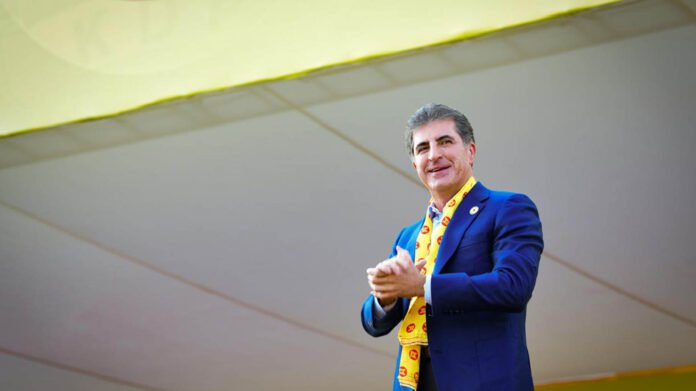
Kurdistan Democratic Party Deputy President Nechirvan Barzani delivered a significant public address celebrating eighty years of institutional operations. He praised historical sacrifices while pledging to protect regional constitutional achievements and advance public governance. Furthermore, he emphasized that institutional modernization remains essential for addressing future political and economic challenges. This anniversary address underlines ongoing efforts to strengthen regional stability across northern Iraq today. Observers view his statements as a strategic call for structural reform within political administration.
The movement originated eight decades ago during a period of widespread social and political turmoil. Founders established the organization to lead regional liberation efforts and represent public aspirations systematically. Over eight decades, the party expanded its administrative structure into a principal governing institution. Today, leadership directs key executive bodies and policy frameworks across regional government administration in Erbil. Consequently, anniversary declarations outline primary strategic objectives for both political and economic development.
In his comprehensive message, Nechirvan Barzani stressed the necessity of national unity and inclusive public representation. Additionally, he positioned the party as a key unifying force across various demographic groups. He stated that political leaders must convert emerging regional challenges into sustainable growth opportunities. Moreover, political analysts emphasize that internal cohesion remains vital for maintaining international investor confidence. Thus, Barzani urged political partners to deepen cooperation and support collective governance initiatives.
Beyond political unity, the deputy president focused heavily on structural modernization and institutional reform processes. He argued that preserving organizational achievements requires continuous adaptation to modern administrative standards today. Furthermore, he called for building public trust through enhanced governance standards and institutional accountability measures. Administrative teams plan to implement operational upgrades across regional public institutions in the coming months. Therefore, regional governance will focus on improving public service efficiency and administrative transparency.
Barzani concluded his address by honoring fallen freedom fighters and thanking loyal supporters across generations. He praised civil cadres who sustained organizational operations through severe economic and political crises. Looking forward, regional leaders aim to strengthen diplomatic ties while pursuing sustainable economic development programs. Political observers expect these reform initiatives to reinforce regional political stability and administrative efficacy. Ultimately, leadership seeks to safeguard constitutional rights while modernizing governance structures across the region.