
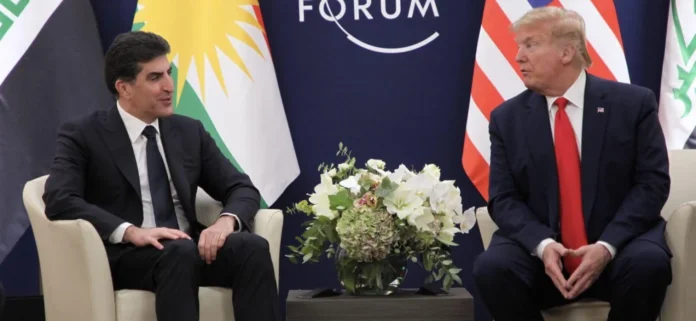
The Trump administration reportedly used Kurdistan Region President Nechirvan Barzani to establish a secret communication channel with Iran’s Islamic Revolutionary Guard Corps (IRGC). The move came as U.S. negotiators questioned whether Tehran’s official representatives had sufficient authority to finalize an agreement.
Around May 10, then-U.S. intelligence chief Tulsi Gabbard reportedly contacted Barzani to help establish communication with General Ahmad Vahidi. Washington wanted to determine whether Iran’s security leadership supported negotiations involving Parliament Speaker Mohammad Baqer Ghalibaf and Foreign Minister Abbas Araghchi.
The concern emerged after Iran delayed its response for more than 10 days. As a result, American officials reportedly questioned whether other powerful institutions could reject agreements reached by government negotiators.
Barzani offered a potential solution because he maintains relationships with officials in both Washington and Tehran. He also lived in Iran during the Iran-Iraq War and studied at the University of Tehran.
Moreover, Barzani speaks Persian fluently and reportedly maintains contacts with senior Iranian officials. These relationships reportedly include figures connected to the IRGC and Iran’s national security establishment.
On May 14, an IRGC representative reportedly arrived at Barzani’s office in Erbil. The official reportedly carried an encrypted mobile phone for a secure conversation with Vahidi.
Barzani asked whether Vahidi supported Iran’s negotiating team and its position. According to sources familiar with the exchange, Vahidi confirmed his support for the negotiators.
He reportedly said the IRGC preferred resolving the dispute through negotiations. Barzani then communicated Vahidi’s response to Gabbard, who reportedly passed the information to the White House.
Following the exchange, Washington reportedly proposed confidential negotiations between American and Iranian officials in Erbil. Iranian officials did not reject the proposal but raised security concerns.
They reportedly feared that Israeli intelligence could target Iranian participants inside the Kurdistan Region. As a result, the proposed Erbil meeting did not take place.
The episode highlighted Erbil’s potential role as a discreet diplomatic channel. It also showed the challenges Washington faced in identifying Iran’s key decision-makers.
Meanwhile, Pakistani and Qatari intermediaries reportedly continue exchanging messages between Washington and Tehran. However, these diplomatic efforts have yet to produce significant progress.
Barzani has also reportedly offered further assistance to restart direct negotiations. Future progress will depend on whether Washington and Tehran can address their differences over regional security and the Strait of Hormuz.