
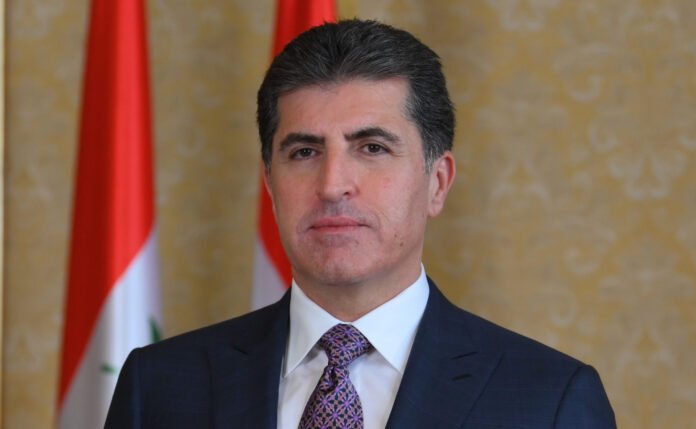
Kurdistan Region President Nechirvan Barzani welcomed the United States’ decision to remove Syria from its list of state sponsors of terrorism on Tuesday. He described Washington’s diplomatic move as a crucial milestone toward regional stability, international engagement, and economic recovery. Regional authorities view the policy shift as a pivotal step toward rebuilding the war-torn country after years of isolation. The decision marks a significant turning point in U.S. foreign policy toward Damascus and its neighboring partners.
President Barzani emphasized that removing Syria from the designation would create new opportunities for regional economic cooperation. Specifically, he highlighted the potential for expanding ties among Syria, Iraq, and the Kurdistan Region. He also expressed hope that Syria’s new trajectory would guarantee full rights for all of its diverse ethnic communities. Consequently, neighboring governments anticipate stronger trade links and enhanced security cooperation along their shared borders.
Syrian Democratic Forces General Commander Mazloum Abdi similarly praised the U.S. administration’s announcement on Tuesday. Abdi said that ending the terrorism designation fulfills the long-standing aspirations of the Syrian people for peace and security. Meanwhile, Syrian President Ahmad al-Sharaa described the policy change as a historic opportunity for national economic reconstruction. Senior officials in Damascus expect the decision to help attract foreign investment and restore vital international diplomatic and economic connections.
Washington had maintained Syria on its state sponsors of terrorism list as a means of penalizing the previous Assad administration. The designation had restricted Syria’s access to international banking networks and severely hindered international commerce. However, the revised policy reflects Washington’s efforts to recalibrate its relations with Syria’s current governing administration under al-Sharaa. Financial institutions therefore anticipate a gradual easing of economic restrictions and improved access to global markets in the coming months.
Reintegrating Syria into the global economy could have significant implications for Middle Eastern commerce and regional infrastructure development. International analysts expect private investors to explore opportunities in energy, transportation, and telecommunications within Syria. Sustained diplomatic normalization could also accelerate humanitarian relief efforts and support the return of refugees and displaced populations throughout the region. Ultimately, leaders in Erbil, Damascus, and Washington view the decision as a potential foundation for long-term stability in the Middle East.