
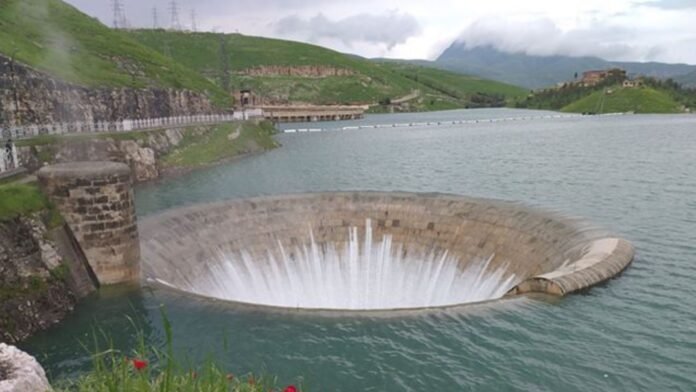
Dukan Dam has risen to within 1.8 meters of full capacity after months of heavy rainfall, and snowfall has increased water reserves across the Kurdistan Region.
Kochar Jamal said on Monday that water levels continue to rise daily. He said the reservoir could reach full capacity later this year if inflow rates remain stable.
Jamal explained that current water levels resemble those recorded in 2003 and 2016. Iraq and the Kurdistan Region had experienced years of severe water shortages before those recovery periods.
Built in 1959 on the Lesser Zab River, Dukan Dam remains one of Iraq’s oldest and most important dams. The structure stands 116 meters high and can store nearly 6.8 billion cubic meters of water.
The dam plays a major role in hydroelectric power generation, irrigation, flood control, and water management across northern Iraq.
Previously, Rahman Khani stated that water storage at Dukan Dam had exceeded 5.7 billion cubic meters. He said the reservoir had reached nearly 87% of its total capacity.
Iraq has struggled with worsening water shortages in recent years. Declining rainfall, rising temperatures, and reduced river flows from neighboring countries have increased pressure on the country’s water resources.
As a result, authorities repeatedly reduced agricultural plans and warned about shrinking strategic reserves. However, heavy rainfall and snowfall this year revived rivers, valleys, and natural springs across the Kurdistan Region.
The improved weather conditions sharply increased water inflows into reservoirs after several years of declining levels.
Officials say the recovery at Dukan Dam could help improve water security, electricity production, and agricultural planning across Iraq and the Kurdistan Region.